7 Study Techniques for Kinesthetic Learners in 2026
Discover 7 study techniques for kinesthetic learners, from walk-and-review to sticky-note mapping, with practical steps you can start using this week.
You've reread the same chapter three times, and the highlighter still will not help you in the exam. The page looks familiar. The question does not. Students hit this with nursing drug lists, chemistry mechanisms, and case summaries, then assume they need more time with the same notes.
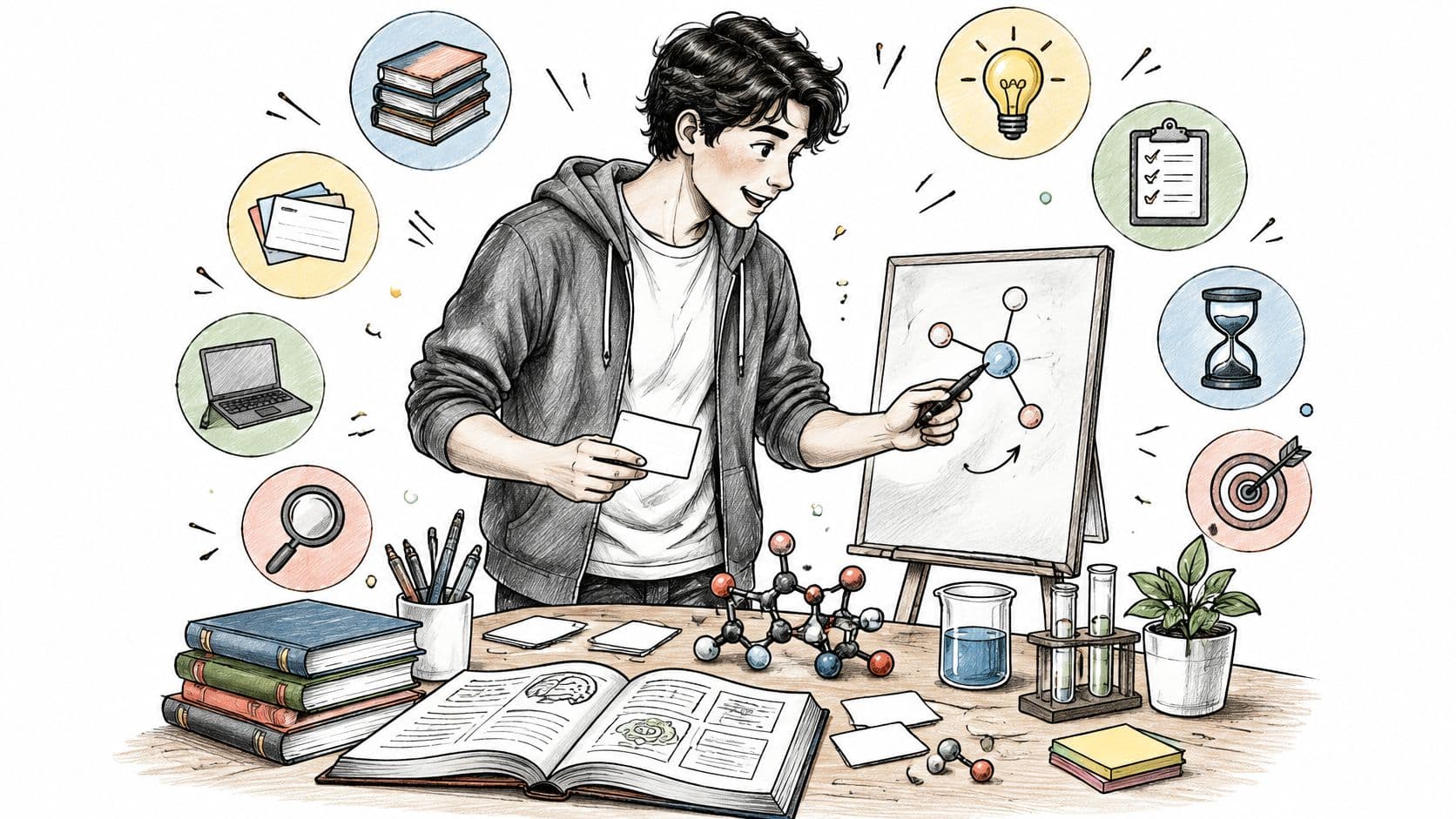
Try a different job for the same hour. Close the book and do something the assessment will ask: recite the classes while you walk, build the molecule, sort the events, or write the steps from a blank sheet. Kinesthetic learners often keep material when they act on it, because the action shows the gap that rereading hides.
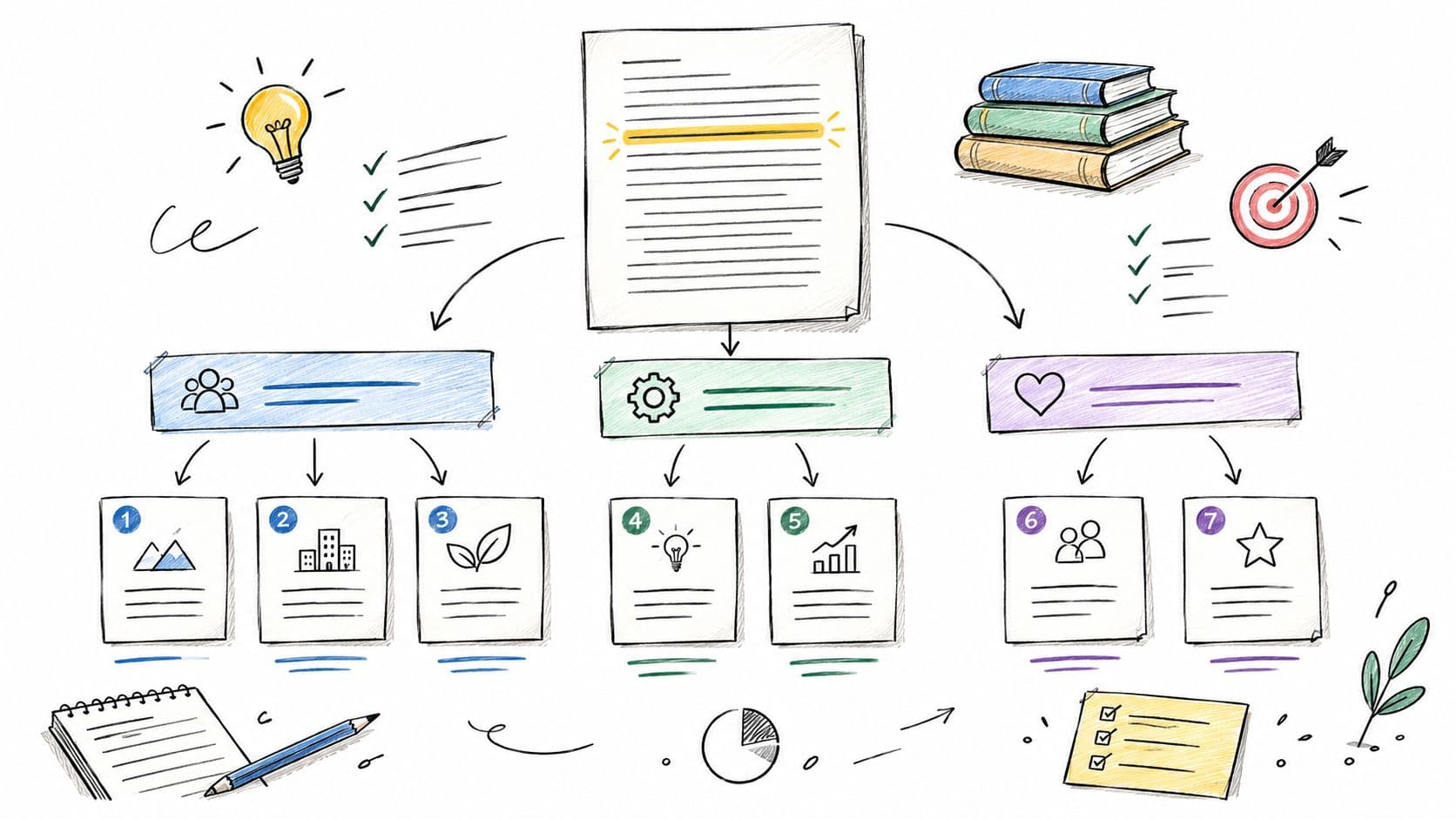
These seven study techniques for kinesthetic learners are options for a normal week, matched to subjects and to the space you have. Monday can be a walk. Midweek can be cards or a wall. The last session should look like the exam. A corridor, a desk, a silent library, and a lab bench do not support the same method. None of them works in every course.
1. Walk-and-Review (Movement-Based Review)
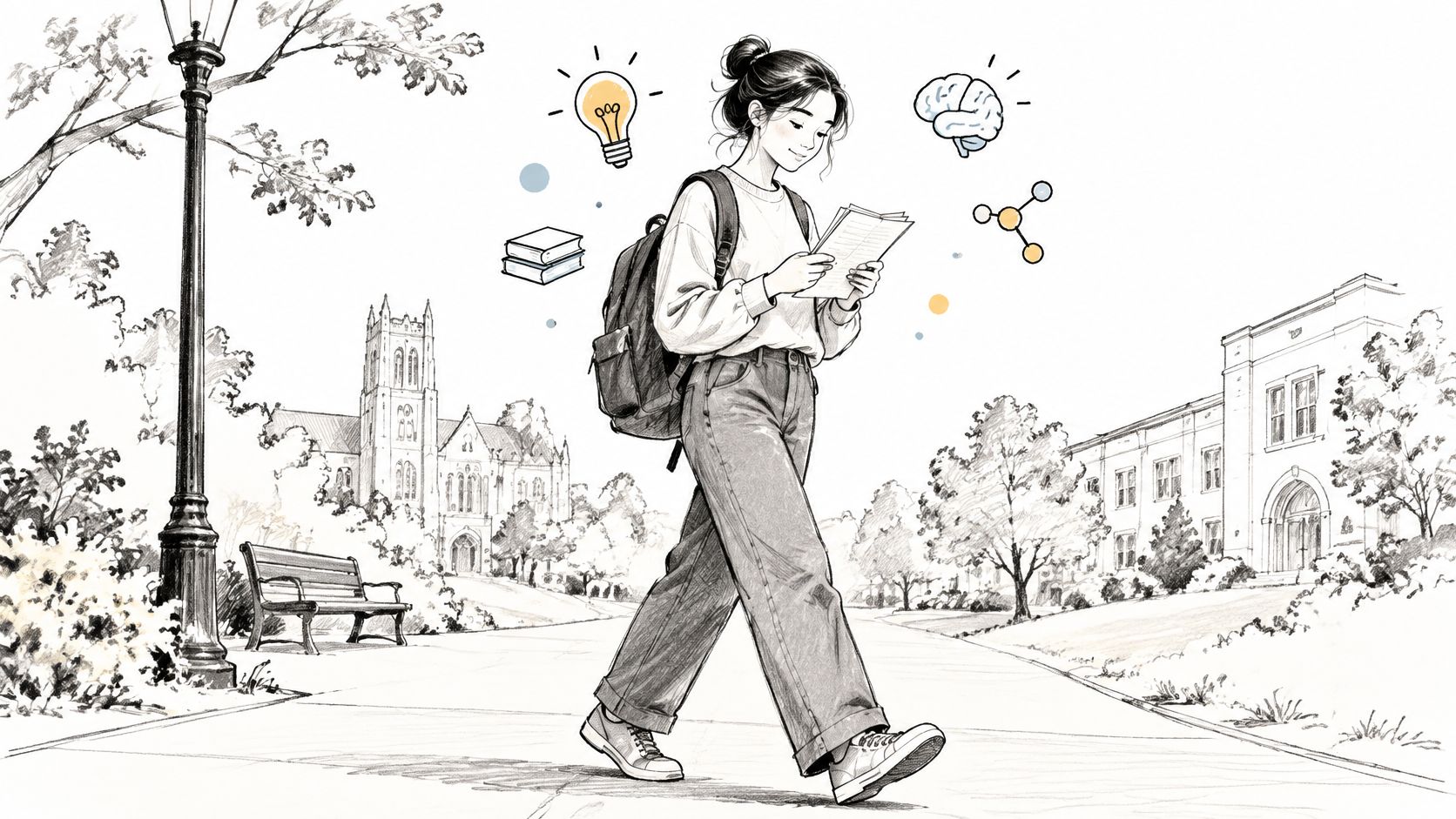
After a lecture, don't reopen the slides and highlight them again. Put the notes away, leave the room, and explain three ideas out loud while you walk.
A nursing student can pace a corridor and recite drug classes, prototypes, and side effects from memory. A biology student can walk a campus path and say the Krebs cycle in order. A law student can pace a bedroom and argue one precedent to an empty chair. The walk holds your attention. The recall is what stores the list.
Retrieval has an advantage over rereading, though newer work also shows limits when tasks get complex or anxiety-provoking, as discussed in Frontiers in Psychology (opens in a new tab). If speaking a whole statute while you walk makes you freeze, sit down and write the rule instead.
How to fit it into the week
Use a 20 to 30 minute walk the same day as the lecture, not the night before the exam. Set the task before you stand up.
- Name the output: Explain three concepts, not "review chapter 4."
- Capture the gaps: Keep a voice memo or a notebook by the door for the points you stumbled on.
- Close the loop: When you get back, check those gaps against the notes and fix them in writing.
Practical rule: Pair the walk with closed-book recall. Passive audio while you stroll is exercise, not study.
Where it fails: Pure symbol work. Stereochemistry, proof-heavy maths, and diagram labelling do not stick if you only talk. Walk to rehearse a sequence you already understand. Build or draw the structure in a later session.
2. Physical Model Building
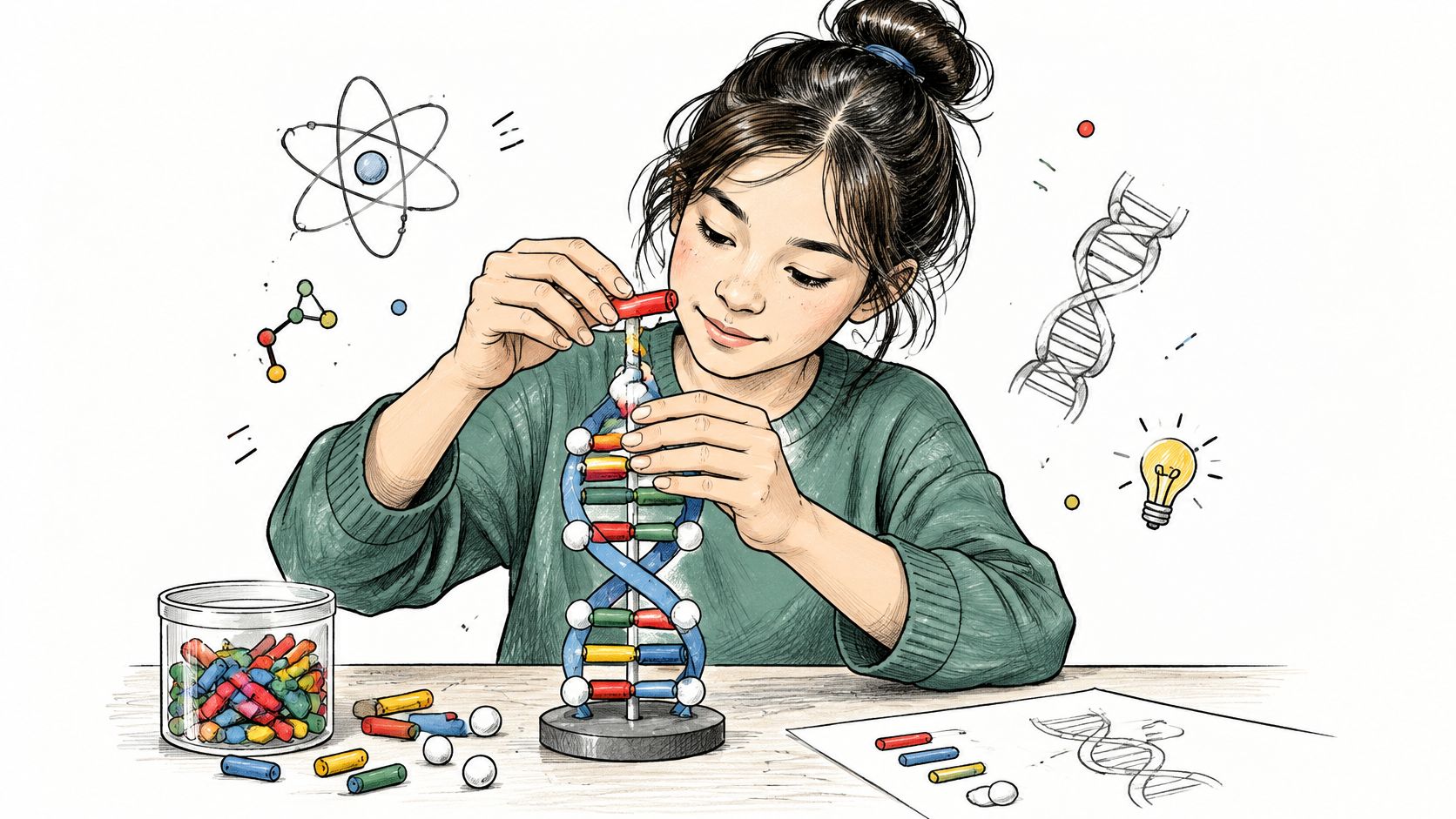
Chemistry stereochemistry is a shape problem. Reading "the wedge comes toward you" does not tell you whether two substituents clash. A model kit does.
Build the compound from memory first. Rotate it. Decide R or S, then open the answer. Anatomy students can shape a clay heart and trace blood flow with a finger. Architecture students can fold a card model before they defend a section. Paper, pipe cleaners, and modelling clay are enough when a kit is out of reach.
Hands-on methods travel beyond one campus. A meta-analysis of activity-based STEM teaching in Asian settings screened 2,810 papers from 2000 to 2020, included 38 studies, and reported a pooled effect size of 0.6596, with 2,230 students in active-learning groups and 2,510 in control groups, according to the ERIC record of that review (opens in a new tab). Feedback still decides whether the build helps.
A simple kit on a desk is often enough to test a structure before you trust the textbook drawing.
Rebuild, don't decorate
Label each part and write one sentence on what it does. Photograph the model, take it apart, and rebuild it the next day with the photo face down. If you can only answer while the kit is in your hands, the kit has become a crutch.
Watch a short build once so the pieces have names, then do the same moves on your own set without pausing the clip.
Watch the video on YouTube (opens in a new tab)
Where it fails: Essay subjects, and most law or history modules. A clay timeline looks busy and teaches almost nothing about argument. Skip the model when the exam marks a written mechanism you have never practised on paper. The model finds the gap. The pen has to close it.
3. Hands-On Card Sorting and Manipulatives
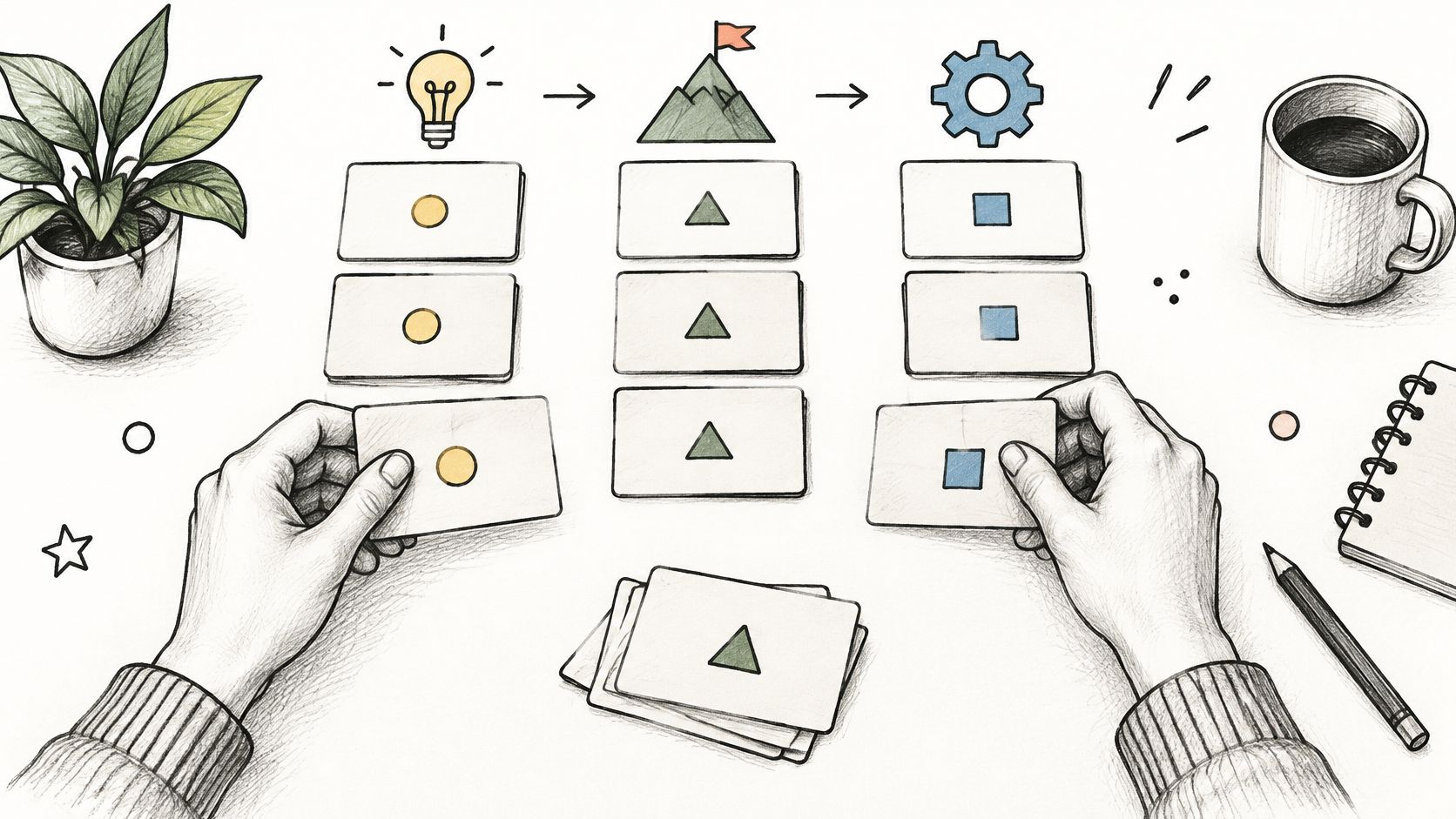
History timelines punish students who only "kind of" know the order. Write one event per card. Stand up. Lay them left to right. Check the textbook and move every card you got wrong.
The same move works for vocabulary, sorted once by theme and again by grammatical form, and for algebra tiles before you write the symbolic steps. Three piles are enough: known, unsure, and unknown. Spend the session on the middle pile. Shuffle and re-sort two days later so the order is not a memory of the table.
Active instruction is not only a lab habit. A 2022 meta-analysis of 104 studies in the humanities and social sciences, covering 111 assessment comparisons and 15,896 college students, found that students taught with active instruction scored 0.489 standard deviations higher than students taught mainly by lecture, at p < 0.001, reported in Higher Education (opens in a new tab).
Keep the cards tied to the paper
- Source them from the course: Use lecture headings and past-paper prompts, not a generic deck.
- Colour by category: One colour per theme, so a wrong pile is obvious at a glance.
- Stop when the sort is perfect: If you never miss, the cards are too easy. Rewrite them as "why this, not that" questions.
Where it fails: Continuous calculations and long proofs. You cannot sort your way through a multi-step integral. Cards also fail when the mark scheme wants a sustained essay voice. Use them to lock categories and sequence, then write.
4. Enactment and Gesture-Based Learning
Assign one gesture and keep it. For sliding filament theory, one hand is actin and the other is myosin. Perform the cycle once with the book closed. Check it. Do it again.
A business student can walk a supply chain across a room, with classmates as supplier, factory, and customer. A physics student can show a wave hitting a boundary with a flat hand. The gesture has to change when the idea changes. Squeezing a stress ball while you read does not teach the wave.
Matching teaching to a declared learning style is a weak bet. A 2025 review of 17 meta-analyses involving more than 100,000 students found an effect close to zero, as summarised by the University of Twente (opens in a new tab). Gestures still help when they encode a process you must recall, not because a quiz called you kinesthetic.
If you can remember the move and not the term, the gesture is a costume. Say the name out loud every time you make it.
Where it fails: Definitions, statutes, and anything graded on exact wording. Acting out consideration in contract law will not produce the elements an examiner wants. Full scenes also fail in shared housing or a silent library. Small hand motions at a desk count, and so does a voice memo. Record one clean performance before the seminar. Don't record ten messy ones.
5. Sketchnoting and Hand-Drawn Diagrams
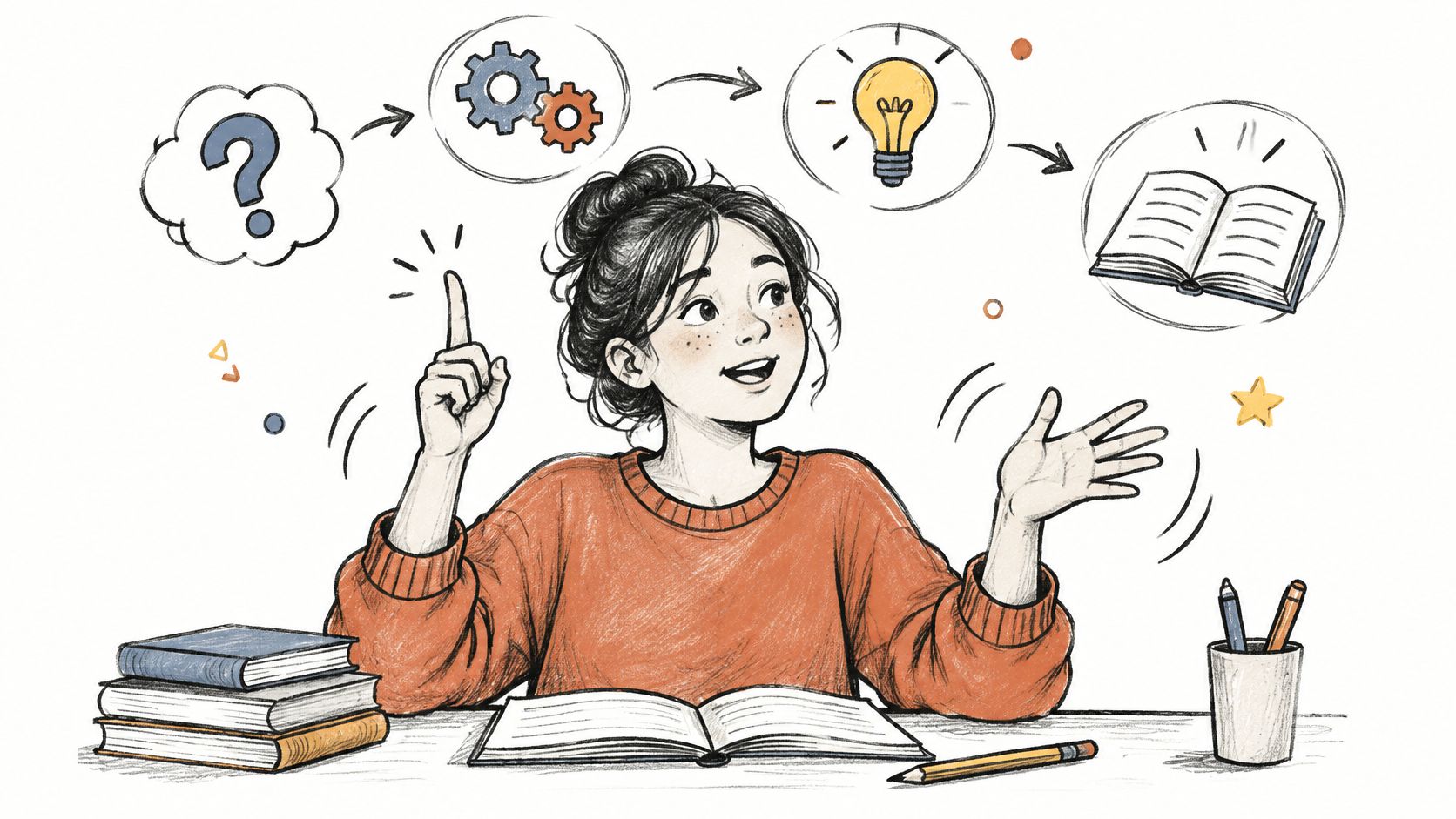
A medical student sketching the cardiac cycle does not need art skill. Boxes, arrows, and three labels beat a dense paragraph you will not reread. An economics student can sketch one supply shift and write the assumption under it. A geography student can mark climate zones with the same three symbols on every map.
Limit the icon set. A small heart means the same thing on every page. Write a short phrase, then one sketch per concept. After the lecture, redraw the page from memory on a fresh sheet. That second drawing is the study session. The first is only a capture.
For choices that hold up when notes get long, the guide on note-taking research is a useful check before you fill another margin with doodles.
What to sketch, and what to leave as words
- Processes: Cardiac cycle, climate zones, or a reaction pathway.
- Relationships: One annotated diagram, not a gallery.
- Not statutes: Exact legal tests belong in sentences you can recite.
Where it fails: Courses that mark precise prose, or symbolic steps you have only drawn. A neat equilibrium sketch will not save a short answer that never states the assumption. Redraw, then write two exam sentences under the picture. If the sketches stay decorative, switch to closed-book problems.
6. Sticky-Note Wall and Physical Concept Mapping
Use a sticky-note wall to build an essay argument before drafting. Put the question in the centre. For a literature essay, give each character, theme, or quotation its own note, then rearrange them until the argument takes shape. In a management case, colour-code stakeholders and priorities. For psychology, place theories beside the studies that support them, and connect only claims the evidence can justify.
A synthesis of STEM active-learning research, including the PNAS review (opens in a new tab), found stronger outcomes when students do the work actively rather than watch. If you spend most of the hour choosing colours, you are decorating. Set a question to answer with each move, such as which evidence supports a claim or what order makes the argument clearer.
Photograph the arrangement, then take the notes down and rebuild the structure as a timed essay plan. Turning that plan into one revision sheet forces you to choose a clear hierarchy; this guide to note-taking layout can help you organise it.
A wall you cannot rebuild from memory is a poster, not a map.
Where it fails: Calculation papers and lab practicals need direct problem-solving or physical practice. Sticky notes alone will not teach a titration or help you find a coding bug. A full wall also takes space, so use index cards on a table if the room is small. In the final days before an exam, skip the wall if you still cannot write a paragraph without looking at your notes.
7. Hands-On Practice with Worked Problems and Physical Testing
This is the session that has to look like the exam. An engineering student writes a structural analysis paper by hand, with a ruler and a calculator, then marks every wrong step. A chemistry student runs the titration and writes the report in the required format that same afternoon. An accounting student completes ledger entries on paper before opening the software.
Freeman and colleagues' 2014 meta-analysis reviewed 225 undergraduate STEM studies. Across 158 studies, active learning raised performance by an average of 0.47 standard deviations, about a 6% gain in examination scores, and in 67 studies lecture-only students had an odds ratio for failure of 1.95, about 1.5 times as likely to fail, as summarised in the College of DuPage active learning guide (opens in a new tab). Doing the problem is the active part. Reading the model solution is not.
A clean practice loop
- Attempt closed: Write every step. Don't peek at the worked answer.
- Time it: Use the same limit the paper allows.
- Log the miss: One line per mistake, then redo that question the next day.
More on turning practice into exam performance sits in this piece on exam study techniques.
Where it fails: Right at the start of a topic you do not understand at all. A blank stereochemistry set with no example wastes the hour. See one worked solution, close it, then attempt a new question. Worked problems also fail as your only method in essay modules, where you still need a mapped argument, not a numerical key. Track accuracy and time. If both stay flat after three sessions, the questions are the wrong level or you are copying.
How the 7 Kinesthetic Study Techniques Compare
Building a Kinesthetic Study Routine That Lasts
A routine works best when each method serves a specific task. Choose two or three techniques for the week, rather than trying all seven in one module.
For cardiovascular pharmacology alongside a short essay, walk after Monday's lecture and recite the drug classes for about 25 minutes. Write down the gaps afterward. On Wednesday, arrange sticky notes to connect mechanisms, indications, and the essay's claim, then photograph the map. On Friday, close your notes and attempt timed questions. Each session has a different check: recall the list, explain the relationships, then retrieve the material under exam conditions.
Match the schedule to the assessment. For a stereochemistry problem set, build a model early in the week and answer handwritten questions later. For a history essay, sort evidence cards before arranging the argument on a wall. Use gestures to practise a sequence of processes; definitions that require exact wording are better rehearsed aloud or written. If saying a difficult proof aloud increases anxiety, work through it at the desk instead.
Choose one module and use a consistent check across three sessions: attempt the task from memory, correct mistakes, then try again. If accuracy stays flat, change the method. Adding more techniques will not fix a mismatch between the activity and the assessment.
If relevant notes or past papers are hard to find, CramShare lists course-matched study notes written by students who already sat the exam. Search by course code, then turn relevant notes into your own cards or sketches and use practice questions for timed attempts. Keep each activity focused on producing your own recall and work.
CramShare is a marketplace for student-written study notes, summaries, and practice materials matched to real course codes and institutions. To make kinesthetic study techniques serve the paper you are sitting, start with course-matched material and turn it into a walk, a card sort, or a timed attempt. Visit CramShare and search by course before your next study block.