10 Study Guides Online for Smarter Revision
Compare 10 study guides online for university, literature, exams, and self-directed learning, plus practical tips for choosing and adapting the right resource.
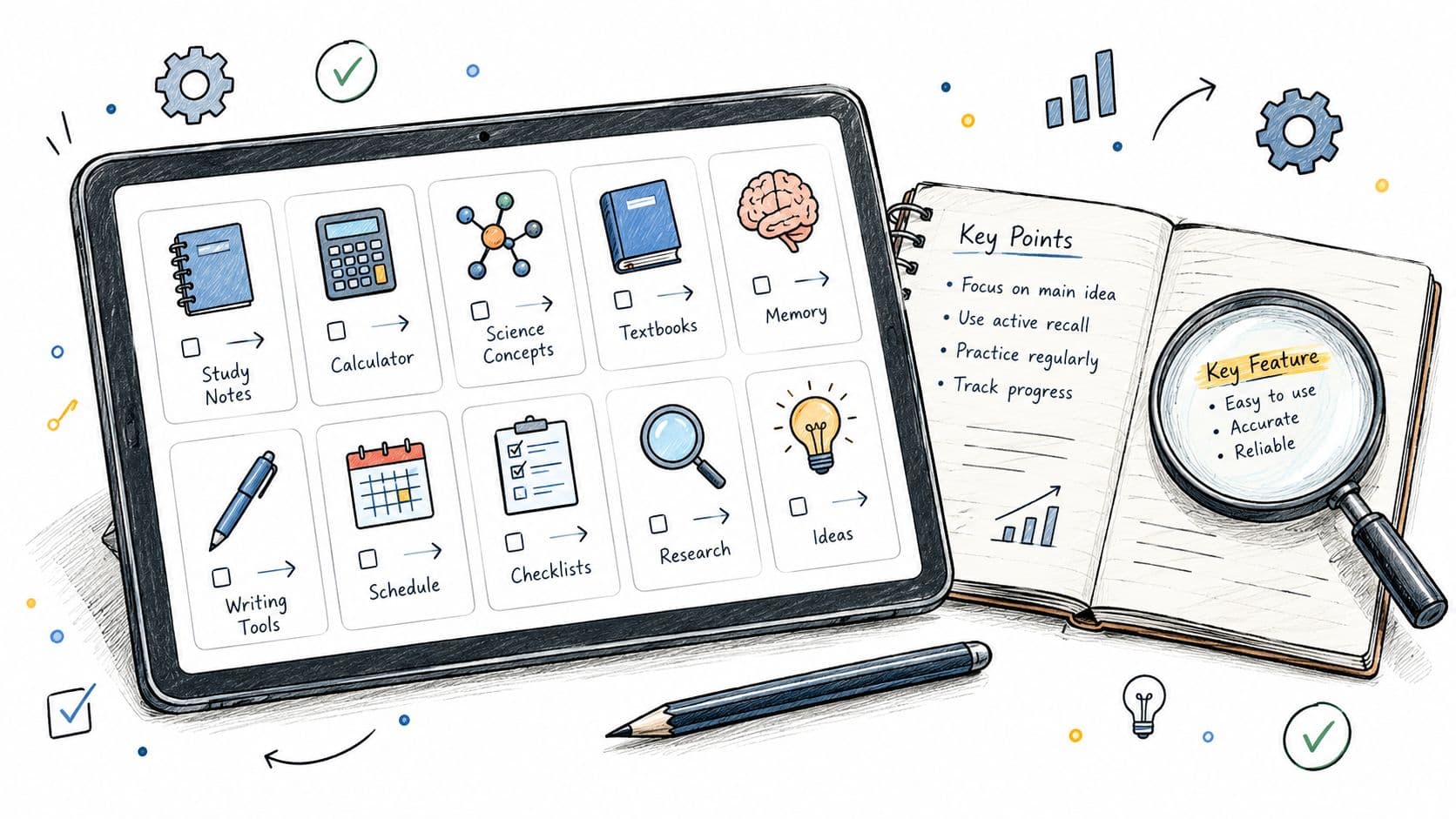
What should you look for when you search for study guides online: a polished summary, a set of worked problems, or material that matches the course on your timetable? Those are different needs, and a resource can be excellent for one while being almost useless for another.
A literature guide may clarify themes but do nothing for a statistics assignment. A flashcard platform may help you recall definitions but won't replace lecture-specific examples. A course marketplace may offer the right module notes, yet still require you to check whether the document is complete, current, readable, and permitted under your institution's academic-integrity rules.
The ten resources below are compared by the decision students face: course fit, learning format, access model, budget and usage limits, quality variation, and how easily the material can supplement official course content. The list includes broad revision libraries, structured teaching platforms, active-recall tools, literature resources, and course-specific document marketplaces.
Use any guide as a learning aid, not as a substitute for your syllabus, lectures, required readings, instructor guidance, or independently completed work. Course alignment matters more than a platform's overall size.
1. CramShare
If your search begins with a course code, university, textbook, or academic year, CramShare is built around that intent. It's a course-focused marketplace and community library where students can find, share, and publish lecture notes, summaries, revision guides, past papers, practice materials, and textbook-linked resources.
That organization solves a common problem with broad subject searches. “Biology notes” may return material from unrelated institutions or levels, while a course-level search can narrow discovery to the module you're currently taking. Students can browse a free library without page limits, watermarks, or daily access caps. Reviewed premium documents provide multi-page previews, so you can inspect the writing, structure, legibility, and relevance before paying.
Why course matching changes the buying decision
CramShare's premium review process focuses on completeness, legibility, and course match, while purchaser ratings offer another signal from people who have acquired the document. Eligible purchases are covered by a refund policy when a document doesn't match its advertised course information or preview.
The platform also makes the author relationship clearer than a conventional anonymous download site. Student authors retain ownership, choose whether to publish materials as free or paid resources, set their prices, and receive 70% of eligible paid sales, with monthly payouts and no minimum threshold. That model can help future students find useful cohort-specific material, but availability still depends on what students have uploaded for each institution and module.
Practical rule: Treat a course tag as a starting point, not proof. Compare the document with your syllabus, assessment topics, required textbook, and lecturer terminology before relying on it.
CramShare is strongest when you need a specific set of notes quickly and want to evaluate the actual document before purchase. It's weaker when your course has a small cohort, unusual content, or limited uploads. Student authorship also means quality can vary, even when a document has passed review.
Use CramShare to complement official materials, not to replace attendance, assignments, or independent preparation. Its upload guidelines, copyright process, buyer ratings, previews, and course-level search make it a practical option for students who care more about exact fit than general subject coverage. Visit the CramShare study resource marketplace to search by institution, course, module, textbook, or academic year.
2. Course Hero
Course Hero suits students who want a large repository organized around classes, schools, and uploaded course documents. Its collection includes study guides, class notes, literature guides, textbook solutions, and other documents, with AI assistance and access to human tutoring for problem help.
The platform's strongest use case is breadth combined with course discovery. If you're stuck on a topic and want to compare class-matched explanations with a textbook solution, Course Hero can place those formats in one workflow. Its personalized dashboard can also make repeated review easier than searching the open web each time.
Access is part of the evaluation
Course Hero uses an access-allotment model on some plans. Plan pages show limits such as 30 course-specific resources per month on some tiers, so the right question isn't merely whether the library contains your course. You also need to ask whether the plan gives you enough access for the way you study, particularly if you tend to download or consult many documents near exams.
Pricing can vary by plan and region, and the final cost may not be fully clear until checkout. The platform also uses an upload-for-access approach, which won't suit every student. A document can be labeled for your institution and still differ from your lecturer's sequence, assessment style, or current reading list.
Course-matched material is most useful when it explains a concept you've already located in your own course materials, not when it becomes a replacement for them.
Before subscribing, preview the available documents for your exact course and inspect the date, author context, page quality, and overlap with your syllabus. Students comparing marketplaces can also review how to download study materials responsibly before using shared documents.
Best fit: students who want a broad course repository plus AI and human tutoring.
Main limitation: access rules, pricing transparency, and uploader quality require careful checking.
Explore Course Hero (opens in a new tab) for course-labeled documents, solutions, and tutoring options.
3. Chegg Study
Chegg Study is built around worked problem support, making it a better match for courses where seeing the method matters as much as seeing the final answer. Its database includes fully solved homework questions and step-by-step textbook solutions, while AI-supported search can help identify relevant explanations. Human experts are available as an escalation option, depending on the service and subscription.
That format is particularly useful in mathematics, science, engineering, accounting, economics, and other problem-solving subjects. A summary might tell you what a formula means. A worked solution can show how to choose the formula, substitute values, handle intermediate steps, and check whether the result makes sense.
Use solutions to diagnose gaps
Chegg is less useful if you only read solutions passively. Try the problem independently first, identify the step where your method breaks down, then compare your reasoning with the explanation. If you copy a complete answer into assessed work, you risk learning less and violating your institution's rules. Review this definition of academic integrity before using solution resources for coursework.
The platform's mobile experience and subscription management through app stores may appeal to students who study across devices. Some plans or user experiences distinguish between AI answers and expert-supported flows, so confirm what's included before subscribing. Pricing also varies by channel and region and may feel expensive if you need help only for a narrow topic.
A Study Pack may bundle additional tools or benefits, but those inclusions can change. Don't choose the bundle because it sounds all-inclusive. Choose it only if the added features solve a problem your course presents.
Best fit: learners who need repeated practice with textbook-linked or homework-style questions.
Main limitation: answer access can encourage passive copying, and plan features should be verified before payment.
See the current options on Chegg Study, then test whether its explanations match your textbook and course notation.
4. StuDocu
StuDocu is designed for students looking for class-specific notes and summaries from other students, organized by university, course, and subject. That makes it a useful discovery tool when you want to see how previous cohorts structured revision for the same course.
Past students' materials can reveal which concepts were grouped together, what terminology appeared in the module, and how classmates condensed a large reading list. They can also help you locate a missing topic or find an alternative explanation when your own notes are incomplete. The resource still needs verification, because an older cohort may have studied under a different lecturer, textbook, syllabus, or assessment format.
Plan around the download rules
StuDocu offers a Premium subscription with quarterly or annual options that open up broader access and downloads. Fair-use limits can still apply, including daily or monthly caps. That matters near exams, when students often want to collect many documents at once.
A sensible approach is to search first, identify the documents that appear most relevant, and inspect the platform's usage rules before committing. Download limits aren't automatically a flaw. They're a practical constraint that can make a subscription unsuitable for students who need offline access to a large set of files.
The platform's international course organization is one of its clearer advantages. You may find material for a course and institution that broad educational sites don't represent well. But the marketplace model also means document quality varies by uploader, and a familiar course label doesn't guarantee completeness or accuracy.
Best fit: students seeking past-cohort notes and summaries for a clearly identified university course.
Main limitation: Premium access still comes with usage limits, and course documents require comparison with current official materials.
Search StuDocu (opens in a new tab) by institution and course before deciding whether its access model fits your revision schedule.
5. Quizlet
Quizlet is strongest when the task is active recall, not locating a complete set of course notes. Students can create flashcards from their own material, use community sets, and practise through Learn and Practice Test modes. The platform can turn a list of terms, formulas, definitions, or concepts into a more interactive revision path.
That flexibility makes Quizlet useful after you've gathered reliable course content. You can convert lecture headings into questions, separate definitions from application prompts, and use repeated retrieval instead of rereading the same pages. Expert Solutions also provide support for many textbooks, although the usefulness depends on whether your exact text and question type are covered.
Convert notes into decisions
A flashcard set is only as accurate as its source. Community-created cards may contain omissions, oversimplifications, or answers that don't reflect your lecturer's required method. Build or edit sets against your syllabus and official notes rather than treating popularity as proof of correctness.
Quizlet's free tier limits some advanced modes. Paid options include Quizlet Plus and Quizlet Plus Unlimited, along with family and teacher plans. The platform displays annual pricing for its Plus products, while monthly options may be more limited or comparatively costly for heavier users.
Recall beats recognition: hide the answer, attempt the response, and only then inspect the explanation or correction.
Quizlet won't usually replace a course-specific document repository, especially for essay-heavy or highly contextual modules. It complements one well by transforming notes into prompts you can practise repeatedly. Its value rises when your weakness is remembering material, rather than finding it.
Best fit: students who already have dependable content and need a fast way to practise recall.
Main limitation: community sets need checking, and advanced study modes may require a paid plan.
Try Quizlet (opens in a new tab) for flashcards, Learn, Practice Test, and textbook-linked problem support. For a broader method comparison, see these spaced repetition tools.
6. Study.com
Study.com takes a more structured approach than a document marketplace. Its short video lessons, chapter summaries, quick reviews, and practice quizzes create a guided sequence for learners who don't want to assemble a revision plan from scattered files.
This matters when you have a defined exam target or need to rebuild a foundation before returning to university-level material. Test Prep tracks support exam-specific study, while College Saver offerings connect learning with ACE- or NCCRS-recommended transferable credit pathways. Those credit arrangements are not the same as automatic institutional acceptance, so students must confirm recognition with their own college or university.
Structure can be useful, but it isn't the same as course alignment
Study.com's lessons may explain a topic clearly without following your lecturer's terminology, reading order, or assessment rubric. Use its content to understand concepts and practise familiar question types, then return to your syllabus and official materials for exact coverage.
The platform separates offerings across learning, test-prep, and college-credit products. Some plans also limit proctored exams per billing cycle, which can affect students trying to complete credit-related work quickly. Read the details of the specific plan rather than assuming every subscription includes the same catalog or assessment access.
Best fit: learners who want bite-sized teaching, a visible sequence, and exam-oriented practice.
Main limitation: structured lessons may not match a specific university module, and credit plans have their own conditions.
Review the current catalog and plan distinctions on Study.com (opens in a new tab) before choosing it as a supplement or credit pathway.
7. Khan Academy
Khan Academy is the clearest choice here for students who want free, structured concept revision. Its library includes lessons, articles, practice, unit summaries, study schedules, and mastery tracking across areas such as mathematics, science, humanities, and test preparation.
The platform works especially well when a course exposes a foundational gap. A student struggling with a later calculus topic may need to revisit an earlier concept before the assigned problem becomes manageable. Khan Academy can provide that explanation and practice without adding a subscription cost or forcing the student to search through unrelated documents.
Broad coverage has a boundary
Khan Academy generally organizes learning by subject and concept rather than university course code, institution, or academic year. That makes it less precise for niche upper-division modules, highly specialized professional courses, or classes where assessment depends on lecturer-specific readings.
Its study schedules and mastery tracking can still support a practical plan. Use the platform to identify concepts you haven't mastered, practise until your errors become understandable, and then test the result against your course's examples. Official partnerships support some test-preparation areas, while the wider library remains useful for general review.
Best fit: students who need free explanations and practice for core concepts.
Main limitation: it usually won't provide notes tied to your exact university module or current assessment.
Start with Khan Academy (opens in a new tab) when cost is the main constraint or when a foundational concept is blocking progress. Pair it with course-specific notes for local terminology, required readings, and assessment expectations.
8. SparkNotes
SparkNotes remains a practical option for literature and humanities revision, particularly when you need a clear summary before moving into analysis. Its guides cover plot, characters, themes, and quotation explanations, while No Fear Shakespeare places original text beside modern-English translations.
The platform also includes quizzes, flashcards, mastery features, AP-focused study areas, and a substantial online collection of title guides and classic texts. Those resources make it useful for checking whether you understand the sequence of events or identifying a theme before writing an essay. They don't replace close reading, because a summary cannot capture every ambiguity, stylistic choice, or interpretive disagreement in the primary text.
Summary is a launch point, not an argument
Use SparkNotes to orient yourself, then return to the novel, play, poem, or required scholarly material. For an essay, record the passage yourself, explain its context, and develop an interpretation rather than reproducing a guide's wording.
Most core study guides are available free, while SparkNotes Plus offers an ad-free experience and convenience features. Its main limitation is subject scope. It's well suited to common literature texts but isn't designed as a general solution for STEM problem sets, laboratory preparation, or course-specific lecture notes.
Best fit: students studying widely taught literature and Shakespeare who need approachable summaries and analysis prompts.
Main limitation: it supports interpretation but cannot substitute for primary-text reading or original essay work.
Use SparkNotes (opens in a new tab) to clarify a text's structure and themes, then build your own evidence-based response from the assigned work.
9. CliffsNotes
CliffsNotes offers concise online literature notes, at-a-glance summaries, and topical support for areas such as writing and grammar. Its long-running brand makes it familiar to students who need a quick orientation before a class discussion or revision session.
The platform's strength is compression. A short plot, character, or theme overview can help you locate the part of a text you don't understand, especially when time is limited. That convenience also creates a risk: concise summaries can encourage students to skip the original material or treat a simplified explanation as the only valid interpretation.
Check the scope before relying on it
CliffsNotes focuses strongly on literature in its current online experience. Some test-preparation resources and additional products may lead to external offerings or print guides rather than a complete online course library. Students looking for university-specific notes, worked STEM solutions, or module-specific past papers will likely need a more targeted resource.
Use its summaries as a diagnostic tool. If you can't explain a character's motivation, trace a theme through the text, or distinguish a plot event from its significance, use the guide to identify the gap. Then verify the point against the assigned work and your instructor's framework.
Best fit: quick literature review, introductory analysis, and selected writing or grammar help.
Main limitation: modern coverage is narrower outside literature, and some products aren't fully online.
Visit CliffsNotes (opens in a new tab) for concise review material, but don't mistake legacy recognition for a guarantee that a guide matches your current course.
10. LitCharts
LitCharts is aimed at students who need close-reading support and essay preparation, rather than broad subject revision. Its guides track themes, symbols, and quotations in detail, with side-by-side analysis that can make difficult passages easier to unpack.
The Quick Lit format is useful when you need a compact overview before a seminar or exam. More detailed quote explanations are better suited to building an interpretation, because they connect language and context instead of stopping at a plot summary. Downloadable PDFs can also support offline annotation and highlighting for students who prefer to study away from a browser.
Granular analysis still needs independent judgment
LitCharts' A+ tier adds unlimited PDF downloads, advanced filters, and an Ask LitCharts AI assistant grounded in LitCharts content. The paid tier is most relevant when you regularly need offline files, faster navigation, or repeated access to detailed guides. Students who only need an occasional summary may find the free material sufficient.
Like SparkNotes and CliffsNotes, LitCharts is primarily a literature and humanities resource. It can support essay planning, but it shouldn't supply the argument itself. Use its explanations to identify a passage worth examining, then form your own claim and support it with the primary text and course readings.
Best fit: close reading, quotation analysis, theme tracking, and literature essays.
Main limitation: advanced features require A+, and the platform isn't intended for general STEM revision.
Explore LitCharts (opens in a new tab) when your learning task involves interpreting language, organizing textual evidence, or preparing a literature essay.
Top 10 Online Study Guide Comparison
Turn Any Online Guide Into a Course-Matched Plan
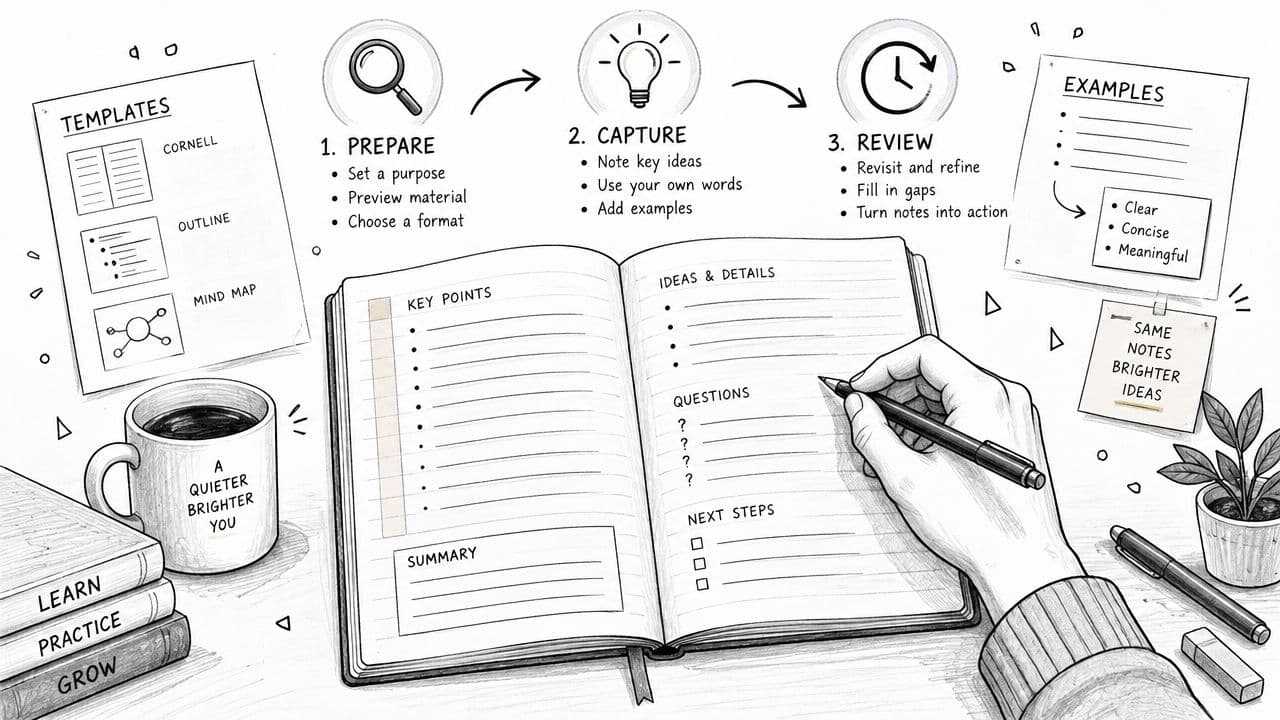
The best study guide isn't necessarily the longest, most popular, or most expensive. It's the resource that solves your current learning problem with the least mismatch. Start with the syllabus, course code, assessment format, and weak topics. If you're preparing for a problem-based exam, prioritize worked examples and practice questions. If you're writing an essay, prioritize primary-text access, quotation context, and analytical prompts. If you're missing lecture coverage, search for course-specific notes before turning to a general subject library.
Check the guide before you invest time or money. Look for its date, scope, author or uploader context, preview quality, source references, and relationship to the current syllabus. A readable document with a clear course match is more useful than a broad file that merely shares the subject name. Broken links, missing pages, unclear handwriting, and unexplained answers are practical quality problems, not minor inconveniences. Research on online study-guide use has found that students may value clarity and navigation while still raising concerns about online activities, critical-thinking elements, and hyperlink functionality, as documented in this university education resource (opens in a new tab).
The wider shift toward modular online study support makes this evaluation more important. University library guidance now points students toward free courses, tutorials, interactive modules, and granular practice resources, including a statistics tutorial described as having 36 tutorial pages and a study resource offering more than 100 practice problems with step-by-step solutions in this library guide. More content gives you more ways to learn, but it also gives you more opportunities to choose material that doesn't match your course.
Build an active workflow
Don't stop at passive reading. Convert a summary into questions, turn definitions into flashcards, explain a difficult concept without looking at the page, and attempt worked problems before reading the solution. Use a structured teaching platform to repair conceptual gaps, then use an active-recall tool to test whether the explanation stayed with you.
Course-specific documents work best alongside broader resources. A set of notes can provide the lecturer's sequence and terminology. Khan Academy or Study.com may clarify a foundation. Quizlet can turn verified material into retrieval practice. Chegg or Course Hero may help you inspect a difficult worked example. SparkNotes, CliffsNotes, and LitCharts can support literary orientation, but your argument still needs to come from the assigned text and your own analysis.
Students already use digital study environments as part of ordinary university work. A comparative university study reported LMS use by 99% of students, university-library use by 89%, and Wikipedia use by 87%, while the LMS was rated useful to very useful by 94% of students in this university technology study (opens in a new tab). That pattern supports a practical conclusion: the most useful guide is often the one that fits naturally into the course workflow you already use, not the one with the biggest marketing claim.
Finally, verify every guide against lectures, required texts, and official assessment instructions. Don't submit copied answers, upload materials you don't have the right to distribute, or use shared documents in ways your institution prohibits. Choose the narrowest trustworthy resource that addresses the problem in front of you, then adapt it into questions, examples, and practice you can complete independently. You won't need every platform. You need the right match, used actively and checked carefully.
CramShare combines a free community library with reviewed premium documents organized by course code, institution, module, textbook, and academic year. Search for course-matched notes, summaries, revision guides, and past papers, preview premium materials before buying, and visit CramShare to find a resource that fits your current revision task.