7 Best Study Notes Sources for Smarter Revision
Find the best study notes for your course with seven platforms compared for relevance, quality, previews, pricing models and practical revision value.
The best study notes usually aren't the longest set, the prettiest PDF, or the file hosted on the biggest platform. That advice sounds sensible, but it breaks down fast when the notes don't match your lecturer, your module outline, or the way your exam is assessed. A polished summary for “intro economics” can still be weak revision material if your course uses different readings, different terminology, or a different order of topics.
A better standard is practical. The best study notes cover the syllabus well enough to spot gaps, stay organized enough to revisit under pressure, align with your exact institution and course where possible, and make quality visible before you commit. They should also help with active revision, not just passive reading. That means looking beyond branding and asking harder questions about previews, ratings, access models, and whether the material can be used legitimately under your institution's rules.
Students also need to separate note quality from platform convenience. A smooth interface can't rescue incomplete notes. A messy-looking scan can still be useful if it maps exactly to your seminar topics. Below is a decision-focused comparison of seven distinct sources, with trade-offs made explicit so you can match the platform to your course, your budget, and your study style.
1. CramShare
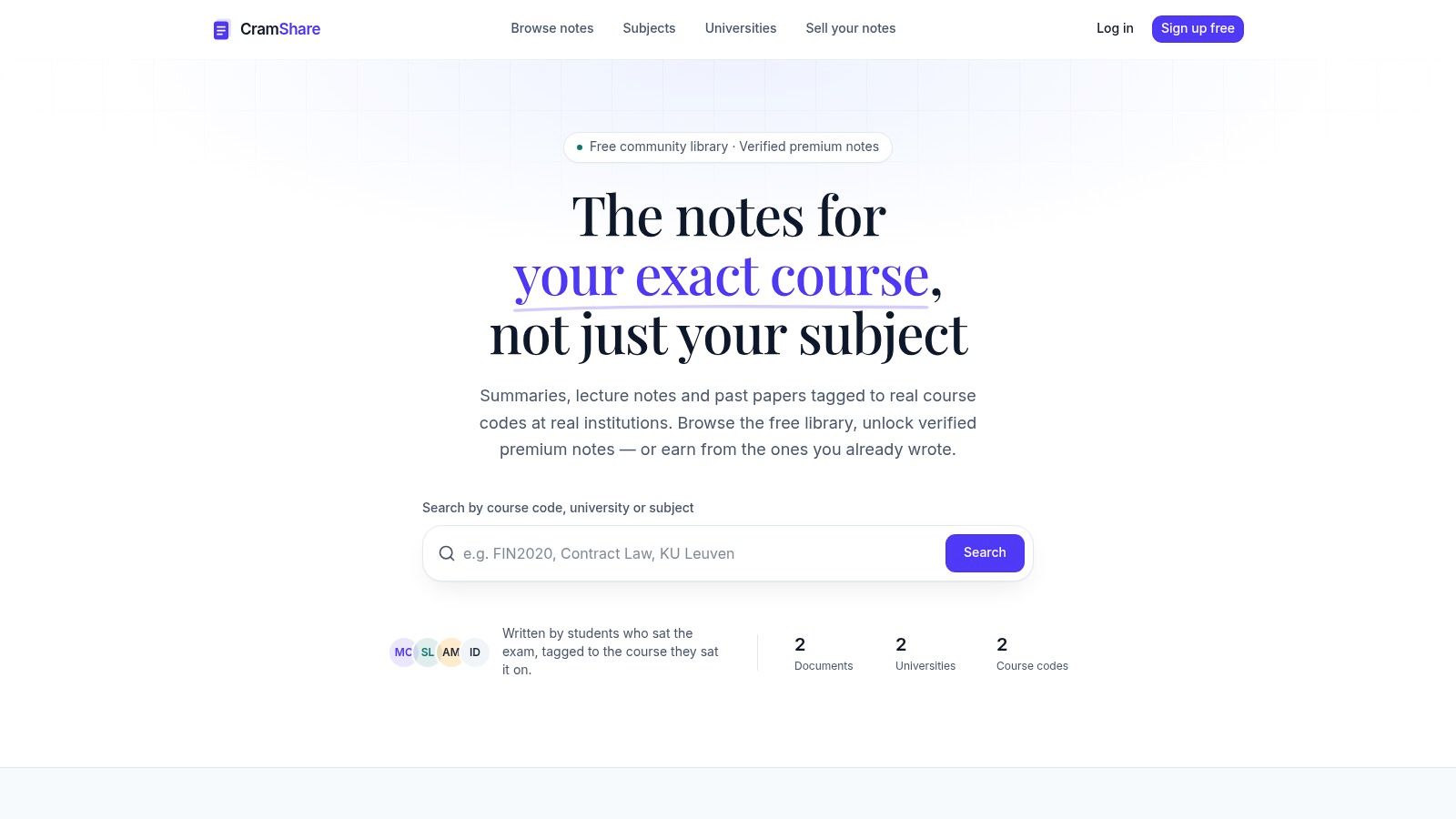
CramShare is the clearest example of a platform built around course match first, not broad subject browsing. That matters because students often lose time sorting through notes that are “close enough” in topic but wrong in module sequence, textbook, or academic year. CramShare lets you search by university, course code, module, textbook, and academic year, which is a stronger filter than generic subject tags.
Its structure also reflects what students value in notes. In a 2026 survey of 503 U.S. students, 93% said searchable, digitally organized notes are important, 81% said active note-taking improves understanding more than relying on recordings or transcripts, and many student AI users said they use AI to organize notes or turn them into study materials, according to the Business Wire survey summary (opens in a new tab). That's a useful benchmark for judging CramShare's emphasis on searchable, structured, reusable course documents rather than generic note dumps.
Where CramShare is strongest
CramShare combines a free library with a reviewed premium marketplace. Free documents can be browsed without creating an account, and premium listings include multi-page previews so you can inspect handwriting, structure, and likely completeness before paying. That preview system is one of its most important advantages, because “best study notes” is partly a quality-evaluation problem.
Practical rule: If you can't preview enough pages to judge structure, headings, and legibility, treat the document as higher risk no matter how good the title sounds.
The trust controls are also unusually specific. Premium uploads are reviewed for legibility and course match, paid placement doesn't determine ranking, eligible purchases are covered by a refund policy when a document doesn't match its preview or course tag, and copyright takedown requests are acknowledged within one working day.
Best for exact-match revision
This is the platform I'd put first for students who want notes tied to an exact course rather than a broad discipline. It's especially useful when your module has a distinctive reading list, a specific lecturer sequence, or an exam that tracks lecture emphasis closely. In those cases, broad “subject notes” often create false confidence because they feel familiar while skipping assessed detail.
A few details matter if you also plan to upload your own materials. Student authors keep ownership, can publish non-exclusively, set their own prices, and receive 70% of eligible paid-sales revenue, with monthly payouts and no minimum threshold. If you're comparing note marketplaces from the seller side, that's a straightforward model, and CramShare's guide on how to sell study notes online explains the process.
- Best fit: Students who need precise course, module, textbook, and academic-year matching.
- Main trade-off: Coverage depends on community contributions, so niche courses may have thin inventories.
- What to inspect first: Preview pages, course tags, and whether the notes look built for revision rather than raw capture.
2. StuDocu
StuDocu is a strong option when you want a large course-specific library but still care about institution-level matching. It has broad coverage across universities and tends to work well for mainstream modules where several cohorts have already uploaded lecture notes, summaries, and past-exam-style materials. The practical appeal is speed. You can often locate something close to your module faster than on a smaller platform.
Its AI layer changes how students use notes, but it also raises the standard for verification. The more a platform offers summaries, quizzes, mind maps, and question-answer tools on top of uploaded materials, the more important it becomes to check the underlying source. That concern isn't abstract. The 2026 HEPI and Kortext survey reported that 95% of students use AI in at least one way and 94% use generative AI to help with assessed work, according to the HEPI report (opens in a new tab).
What StuDocu does well
StuDocu is useful for turning found notes into study assets quickly. If you already have a decent set of course-matched notes, AI-generated quizzes or summaries can help you test recall and condense bulky material. That makes the platform more than a repository. It can become part of a revision workflow.
Good notes and a good interface aren't the same thing. On StuDocu, the interface may save time, but the uploaded document still needs to match your syllabus.
The other strength is volume. When your own cohort resources are weak, volume increases the odds of finding overlapping lecture topics, textbook chapter summaries, or exam-focused condensation.
Where to be careful
Pricing details vary by country and may only become clear after login, which makes value harder to compare upfront. Quality also varies across uploads, which is typical for student-contributed libraries. You'll need to read previews critically and compare what you find against your own slides and seminar topics.
If you're deciding between broad PDF access and a more exact-match marketplace, it helps to compare your options with examples of course-specific study note PDFs. StuDocu is often better when you need breadth first, then refinement.
3. Course Hero
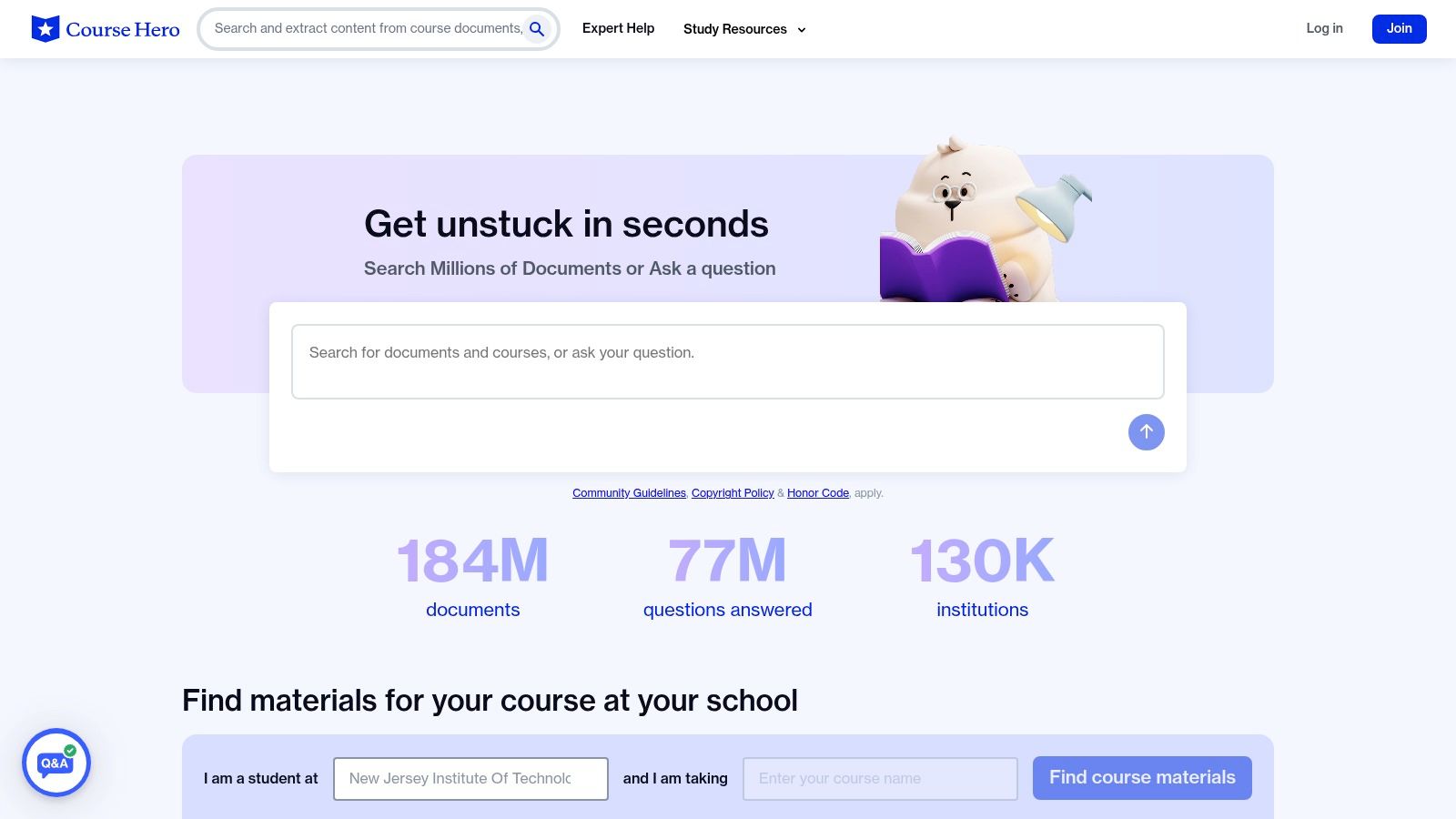
Course Hero is less about finding one elegant notes set and more about assembling support from several resource types. It combines course-matched documents, study guides, textbook solutions, and tutor access. That makes it useful for students whose problem isn't just “I need notes,” but “I need notes plus explanation.”
This broad model has an obvious upside. If your lecture notes are incomplete, you may be able to pair a course document with textbook support or tutor help in one place. For assignment-heavy modules or quantitatively demanding courses, that can be more useful than a pure notes marketplace.
Why platform breadth can help, and when it can mislead
Course Hero works best when you treat each document as one piece of evidence, not as a final answer key. Because the library is large and user-uploaded, coverage is wide but consistency isn't guaranteed. Some files are tightly tied to a specific class. Others are only loosely related.
That's why academic use matters here as much as convenience. Students should use shared materials to clarify concepts, test recall, and compare coverage, not to bypass independent work. If you need a practical benchmark for that boundary, this overview of what academic integrity means in practice is a useful frame.
Best fit for mixed support needs
Course Hero is a sensible choice when you want documents plus backup help. It's especially useful if your module uses a major textbook, your notes are patchy, and you expect to need explanation as well as summaries.
- Best fit: Students who want notes, textbook help, and tutoring in one ecosystem.
- Main trade-off: User-uploaded quality can be uneven, so volume doesn't equal reliability.
- Most important check: Whether the document appears course-specific or is just broadly topic-relevant.
4. Docsity
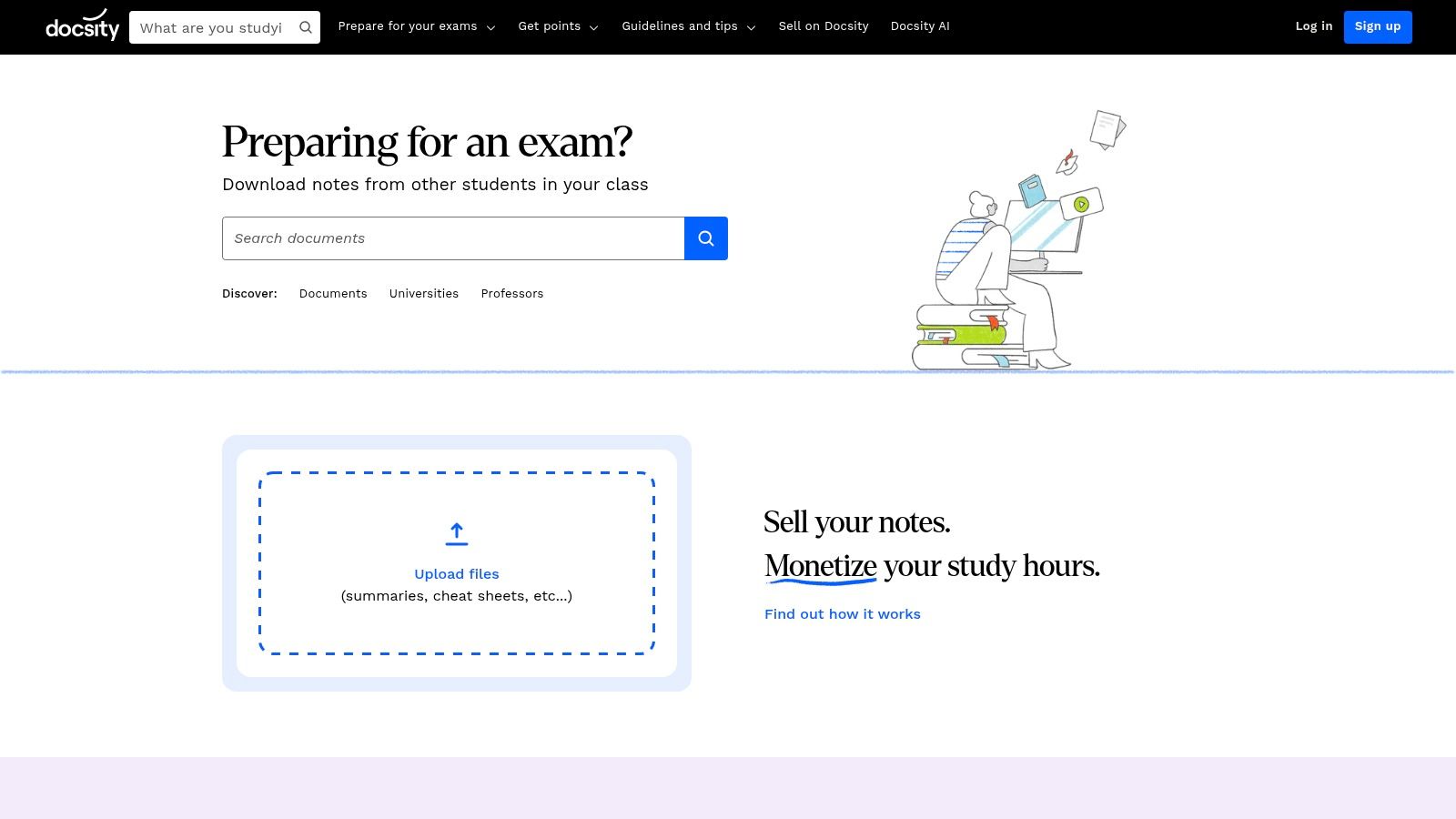
Docsity has a more international feel than some competitors, and that matters if you're studying outside the most heavily represented U.S. and U.K. institutions. It mixes community sharing, paid documents, AI study tools, and video courses, with a points-based Premium structure for downloads.
For students in European universities or internationally mixed programs, that broader footprint can make it easier to find institution-adjacent material. It's also one of the better choices if you want ratings and previews to help with filtering. Those signals don't guarantee quality, but they make rough triage easier.
The real trade-off is complexity
Docsity's challenge isn't relevance so much as decision friction. The points model can feel less intuitive than a simple subscription or pay-per-document setup. If you only need one highly targeted set of notes, that can make the platform feel heavier than necessary.
Still, its combination of notes, AI summaries, quizzes, mind maps, and video material can work well for students who revise in layers. You might start with shared notes, identify weak topics, then use the extra tools to build active recall around them.
If you need one exact document, simpler payment models usually feel better. If you need several resources across a semester, a more complex ecosystem can pay off in convenience.
Best fit for cross-border study needs
Docsity is one of the better options when your course sits in a less commonly covered institution, especially in Europe, or when you prefer a mixed library-and-tools environment. It's weaker if you dislike points systems or want complete pricing simplicity.
5. Stuvia
Stuvia takes a cleaner marketplace approach. Instead of pushing you toward a broad membership mindset, it lets you buy individual documents. That makes it attractive when your need is narrow and immediate: one summary for a specific unit, one revision guide for one exam, one set of notes for one qualification topic.
This pay-per-document model changes how you should judge value. On subscription-heavy platforms, students often download widely and sort later. On Stuvia, each purchase should clear a higher bar because you're paying for that specific file. Previews and seller credibility matter more.
Why Stuvia can be the most economical option
If you only need one targeted resource, avoiding a subscription can be the better deal. That's especially true late in term, when you've already got your own lecture material and only want a comparison set or condensed revision version.
The marketplace setup also tends to surface current summaries and exam prep materials relatively quickly. In fast-changing courses, that can be a strength.
Where students get caught out
Service fees at checkout can affect perceived value, and quality still varies by author. Stuvia is only as good as the listing in front of you. If the preview is thin or the title is broader than your module, skip it.
- Best fit: Students who want one specific document without a recurring plan.
- Main trade-off: Value depends heavily on individual listing quality and checkout cost.
- Most important check: Whether the preview shows a genuine course summary or just sparse topic notes.
6. Oxbridge Notes
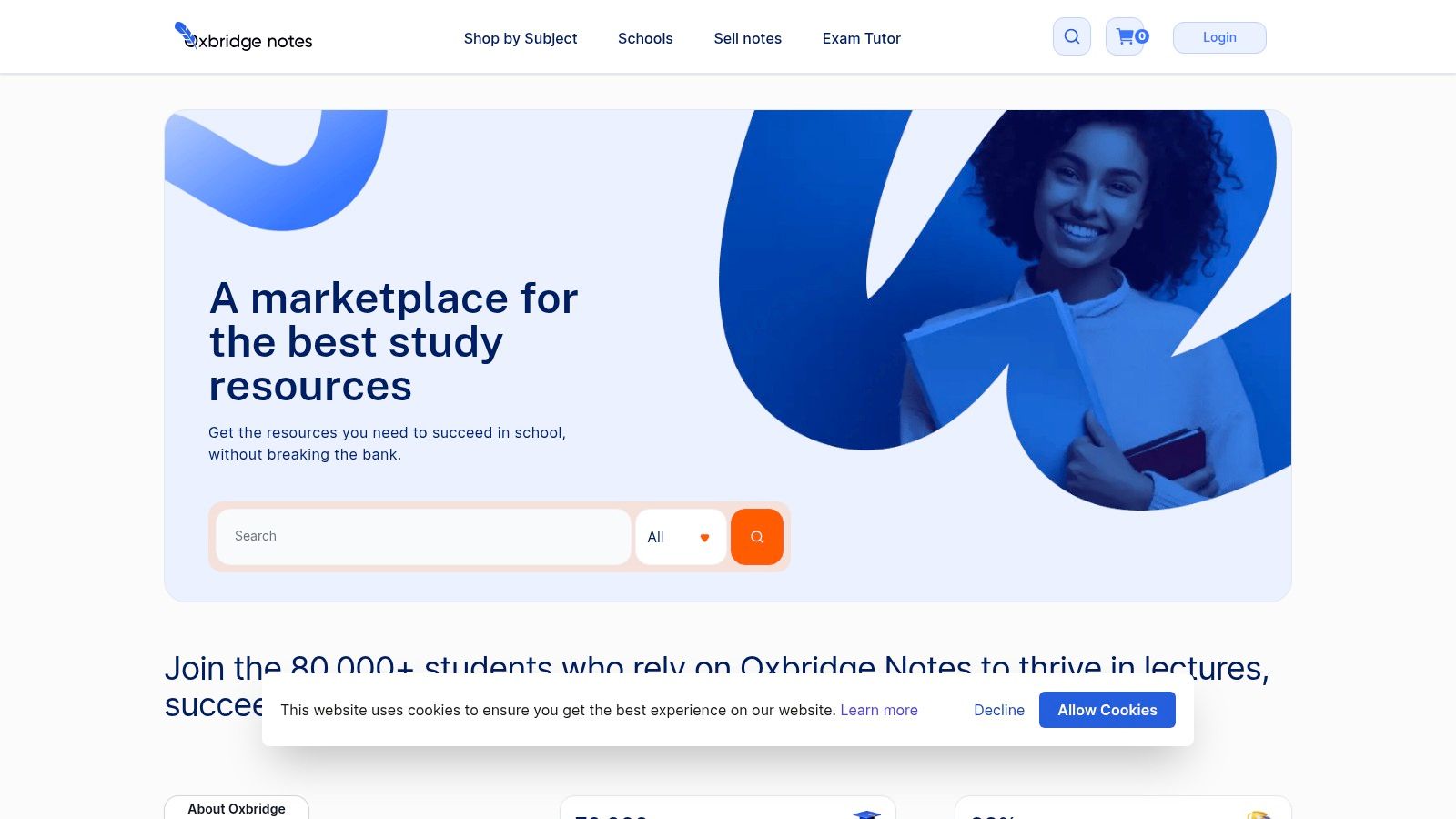
Oxbridge Notes is narrower than the big multi-subject marketplaces, but that focus is part of its value. It leans into curated, exam-oriented notes, with especially visible strength in areas such as Law and Medicine and in U.K. and Ireland contexts. If your priority is baseline document quality over sheer library size, this curation matters.
The product pages usually make evaluation easier than on open upload platforms. Visible page counts, tables of contents, and substantial sample previews help you judge whether the notes have real coverage or just polished packaging. That's one of the clearest markers of note quality in this whole category.
Quality is the selling point
Oxbridge Notes is for students who'd rather inspect fewer, more deliberately packaged options than sift through many mixed-quality uploads. In dense, cumulative subjects, that can save time. You're often buying notes that are already shaped around exam use rather than raw lecture capture.
That matters because there isn't one universally best note format. A nuanced review in Frontiers in Psychology on note-taking method evidence (opens in a new tab) argues against simple “one best method” thinking and supports matching note structure to the task. Oxbridge Notes fits the student who wants condensed, retrieval-oriented material for exam preparation rather than a broad searchable archive.
The cost of curation
The trade-off is narrower breadth and sometimes higher one-time prices per document. If you study outside its stronger subject clusters, the catalog may feel limited. But for students in its core areas, it's one of the more straightforward places to judge quality before purchase.
7. Studydrive
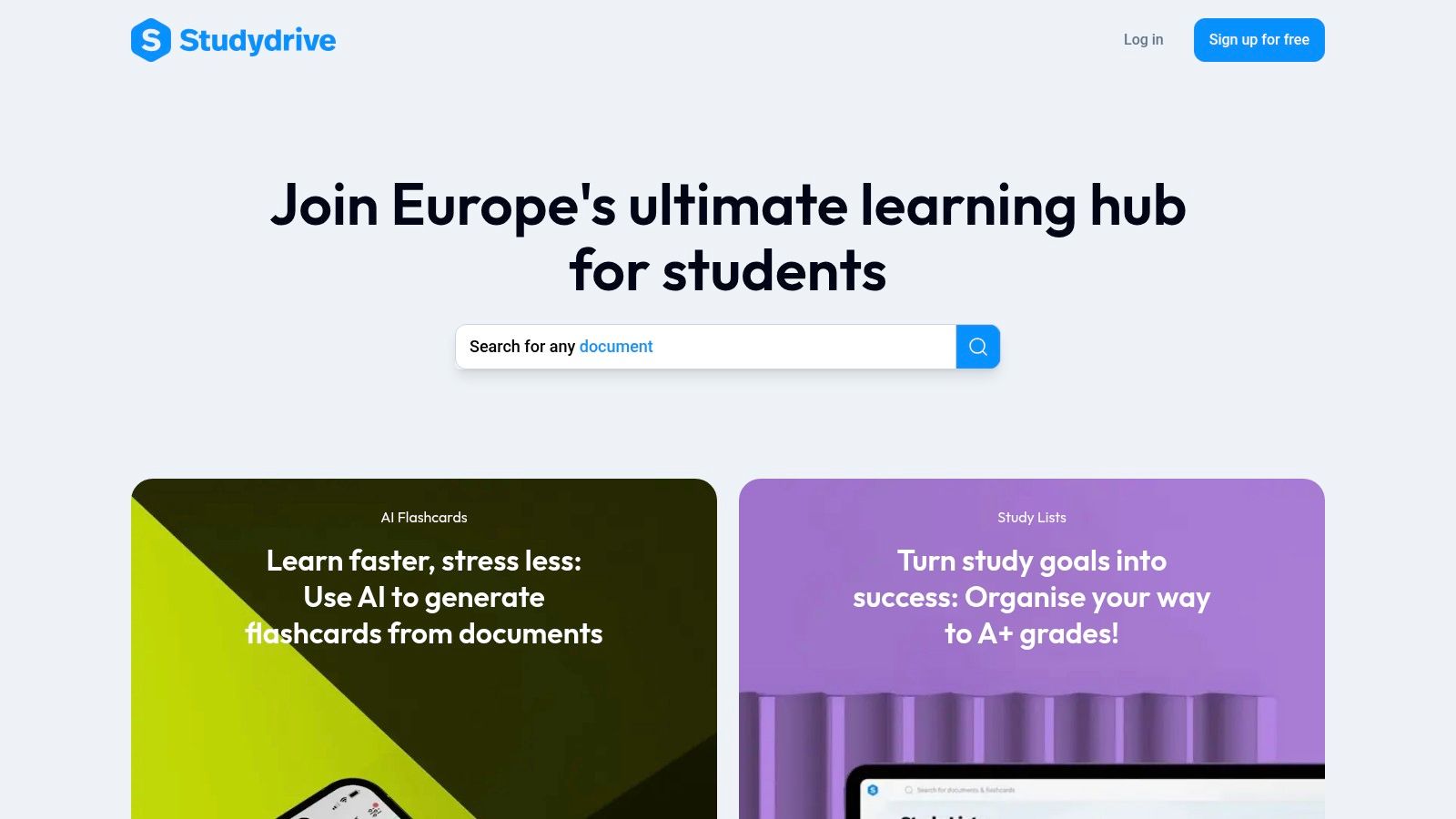
Studydrive sits closer to a study community than a pure notes store. That changes its value. You're not only looking for documents. You're also stepping into course-level sharing, flashcards, and Q&A threads that can become useful around exam periods when students start surfacing likely topics and clarifying confusing lectures.
For European institutions, this community layer can be especially useful. Some courses generate weak formal notes but strong informal discussion. In those cases, a platform with active course spaces may help you identify which note sets are being used and discussed.
Community can improve context
A static PDF rarely tells you whether it's enough for the exam. A community thread sometimes does. Studydrive's course-specific organization and student interaction can add context that pure marketplaces lack.
There's also a design lesson here. An older user survey of 1,624 Sonocent Audio Notetaker license holders, mostly students, found that 91% said their notes were well organized and easy to find, and 86% said note-taking felt easier and more worthwhile, according to the Sonocent user survey whitepaper (opens in a new tab). That doesn't evaluate Studydrive directly, but it does support a broader point: platforms become more useful when they improve retrieval and organization, not just storage.
When Studydrive makes the most sense
Studydrive is strongest when you want notes plus peer context. It's weaker if you want all pricing and download terms obvious upfront, since Premium access and region-specific subscription details can require extra checking.
The “best study notes” sometimes come from the best surrounding context. A decent summary with active peer discussion can beat a polished document that no one in your course actually uses.
Top 7 Study Notes Platforms Comparison
Choose Notes You Can Verify and Use
The smartest way to choose study notes is to work from your course outward, not from a platform inward. Start with the exact university, course code, module name, textbook, and academic year. If a platform can't help you filter at that level, you'll spend more time evaluating weak matches and may end up revising from notes that feel familiar but miss assessed detail.
Then inspect the document itself. A table of contents, multi-page preview, visible headings, and readable formatting tell you more than a high-level title ever will. You're looking for signs of complete coverage across the syllabus, not just a few strong pages on popular topics. Good notes should make it easy to locate lecture themes, seminar concepts, core readings, and likely exam areas under pressure.
After that, judge organization and use case separately. Some notes are built for explanation. Others are built for recall. Some are ideal as searchable digital references. Others are better as condensed revision sheets. Don't ask which format is universally best. Ask which one fits the task in front of you.
A practical workflow looks like this:
- Search precisely: Use institution, course code, module, textbook, and year whenever possible.
- Preview before trusting: Check headings, structure, legibility, and whether the document appears complete.
- Test syllabus coverage: Compare the notes against your lecture slides, reading list, and assessment topics.
- Match the access model to your need: A subscription suits broad exploration. Pay-per-document suits targeted gaps.
- Use notes actively: Turn them into recall questions, concept explanations, and practice prompts instead of just rereading.
Shared notes should support your own coursework, not replace attendance, independent study, or original work. You should also avoid materials you aren't permitted to use, especially copyrighted content or assessment materials shared outside legitimate boundaries.
If precise course matching and transparent previews matter most, CramShare is a strong starting point because it's built around those filters rather than around broad subject discovery. That won't make it the right choice for every student or every course. But it does make it one of the clearest options when relevance and evaluable quality matter more than sheer library size.
If you want study notes that are easier to judge before you use them, CramShare is worth a look. It helps students search by university, course code, module, textbook, and academic year, with free resources and previewable premium documents that are built around exact course matching rather than broad subject tags.