10 Ways to Find College Notes Online
Find legitimate college notes online with 10 resource options, course-code checks, quality tips, and ethical guidance for smarter studying.

You search college notes online for one class, find a stack of plausible-looking files, and only later realize the syllabus doesn't match, the textbook is different, or the notes were built for another academic year. That mismatch wastes time and, if you're not careful, can push you toward materials that are incomplete, outdated, or risky under your school's academic-integrity rules. The smarter approach is to compare note sources by exact university, course code, module, textbook, and academic year, then use shared materials as study support, not as a substitute for attending class or doing your own work.
The list below compares 10 legitimate routes for finding college notes online, with the same practical lens each time, matching precision, document quality, access model, and limitations. A few platforms are broad and convenient. Others are more useful only if you already know the exact course you need. The right choice depends on how well the material lines up with your course, how much you can preview before paying, and how carefully the platform handles copyright and integrity concerns.
1. CramShare
CramShare is the clearest fit if you care about course-level matching instead of broad subject browsing. It lets students search by university, course code, module, textbook, and academic year, which matters because “biology notes” or “economics notes” tells you almost nothing about whether the file matches your class. That focus is the main reason it stands out in a crowded market of college notes online.
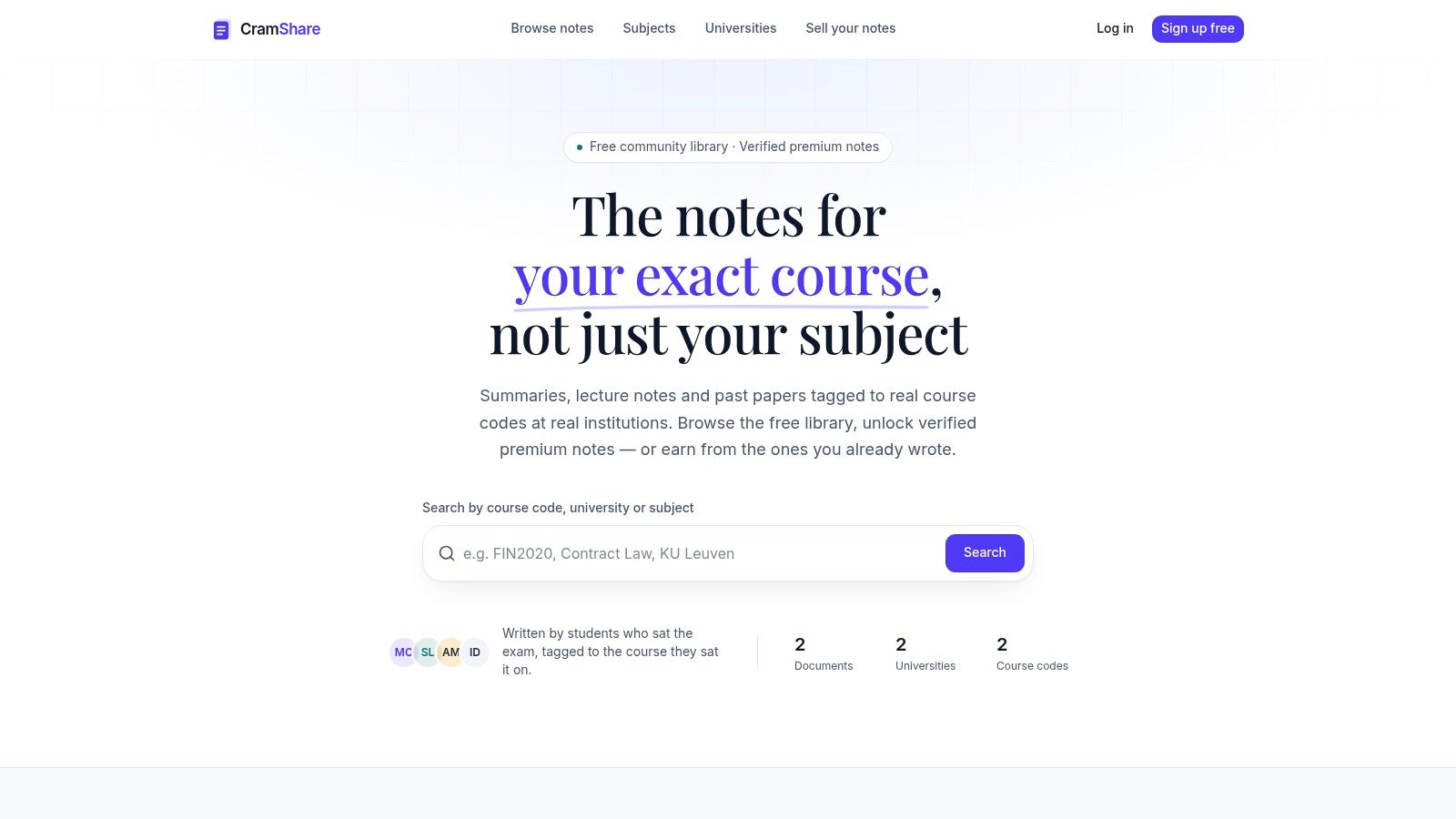
Free documents open immediately, with no page limits, watermarks, or daily caps, so you can inspect real material before deciding whether it helps. Premium documents are reviewed and include multi-page previews, which is useful when you want to judge handwriting, completeness, and relevance before paying. Eligible purchases can be refunded if the document doesn't match its preview or advertised course tag, which reduces the risk of buying the wrong pack.
Practical rule: If a note pack doesn't match the course code, textbook, and year you're taking, treat it as background reading, not as a substitute for your class materials.
CramShare is also built with a seller side in mind. Student authors keep ownership, can publish for free or set a price, and receive 70% of qualifying sales paid monthly with no minimum threshold. The platform also says premium uploads are checked for legibility and course relevance, buyer ratings are public, and trending documents are ranked by real reopen activity in the week before exams, not by paid placement. That combination makes it one of the more transparent options for students who want both relevance and trust signals.
2. StuDocu
StuDocu works as a broad-library option, but broad coverage only helps if the file matches your exact class. Search by university, course code, module title, textbook, and academic year before you treat a document as usable. For students looking for college notes online, that level of filtering matters more than a subject label.
The platform also goes beyond static uploads. StuDocu includes an AI helper grounded in uploaded documents and a mobile lecture recorder that turns audio into notes, so it can support both review and capture. Use those tools as a starting point, not as proof that the file fits your syllabus. User-uploaded material still needs a close read for legibility, completeness, and course fit.
What to check before paying or downloading
- Course identity: Confirm the university and course code, not just the subject name.
- Document type: Decide whether you need notes, summaries, past papers, or exam prep.
- Preview quality: Use previews to check whether the pages are legible and complete.
- Access model: Subscription plans can feel restrictive if you only need one file.
StuDocu makes the most sense when you want a wide search net and can verify relevance yourself. If you only need one exact module pack, a narrower course-matched source may save time. If you want to compare how a free, preview-first library handles this, CramShare's guide to free study notes shows what a no-page-limit preview model looks like in practice. Start at StuDocu (opens in a new tab) by searching your exact course code, then use the preview pages to confirm the upload matches your syllabus before paying.
3. Course Hero
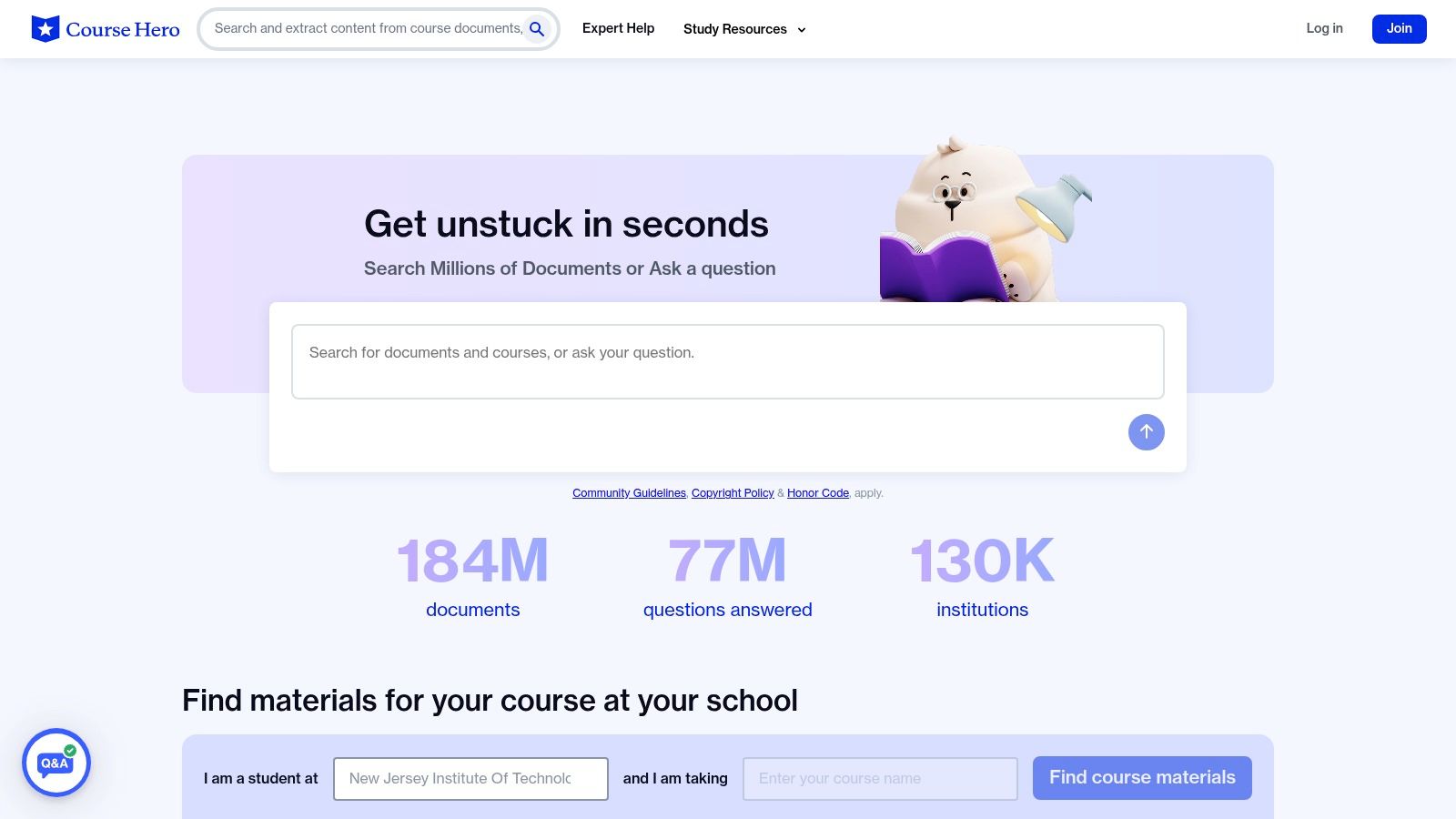
A student searching for college notes online often needs more than a broad subject label. Course Hero is useful when the document, the course code, and the textbook all line up, because that is the point where lecture notes, solutions, and Q&A support start to reinforce one another. If the upload only looks close on paper, it can still miss the actual module.
Course Hero combines documents with AI help, tutor support, and textbook solutions. That mix helps when a notes pack leaves gaps in the explanation, or when you need to check whether a worksheet answer matches the way your class covered the topic. The tradeoff is familiar on large user-uploaded platforms, document quality varies, and the first result is not always the right one.
Where Course Hero fits best
Course Hero works best if you want documents, AI, and tutoring in one place. Its contribution model also lets students gain access by uploading their own materials, which can help if they already have a useful archive of class files. That makes it less like a simple download library and more like a study system with shared inputs.
The main limitation is that subscription pricing is not shown per document, so you cannot tell whether one notes pack justifies the monthly fee until after you commit. Preview length and document quality also need manual checking, since neither broad subject tags nor search results prove a syllabus match. A course-specific library like CramShare's study material downloads makes the preview-before-pay step explicit, which is easier to evaluate when exact university and module matching matters most. Course Hero is more useful when you want several help modes in one place and are willing to verify relevance yourself. See the platform at Course Hero (opens in a new tab).
4. Chegg Study
Chegg Study isn't really a notes marketplace, and that distinction matters. It's better for students who need step-by-step solutions, expert Q&A, and textbook explanations than for students who want lecture notes or semester packs. If your goal is to understand a problem set, it can complement notes well, but it shouldn't be mistaken for a direct source of class-aligned documents.
That makes Chegg useful in a narrower way. A lecture note pack tells you what to study. Chegg helps you work through the questions that follow. If you're comparing resources for college notes online, think of Chegg as a support layer, not the main source.
Its biggest drawback is also its biggest strength. Because it leans toward solutions and explanations, it can be less helpful when you need course-specific notes tied to a particular professor's lecture sequence or a specific academic year. Students who only want one class's notes may find it too indirect.
Use it for clarification, not replacement. If a note pack and a textbook problem solution disagree, cross-check both against your official syllabus and lecture slides before you rely on either one.
Chegg makes the most sense when you're balancing revision with problem-solving. It's a practical add-on for math, science, and problem-heavy courses, but it's not the best first stop if your priority is exact note matching. Visit Chegg Study if that blend of solutions and study tools fits your workflow.
5. Quizlet
Quizlet works best when you already know the course you are studying and need quick repetition, not when you are trying to judge whether a set is aligned to your module. Students and instructors create class-tagged study sets, condensed notes, and practice decks, so it is useful for turning lecture material into active recall. For college notes online, that makes it strongest as a review tool after you have confirmed the source material matches your course outline.
It fits short, structured sessions. You can drill terms, definitions, and concept pairs on a phone or laptop instead of rereading long notes. The practice modes are useful for exam warm-up, but the same simplicity also creates a limit. Not every set is course-verified, so relevance can shift from one upload to the next.
The safest way to use Quizlet is to match a set to your exact class label, then check it against your notes and syllabus. Course code, module title, textbook, and academic year matter more than a broad subject tag. If a deck feels too general, too polished, or too detached from the wording in your lecture materials, treat it as a study aid rather than evidence of fit.
Good uses and weak spots
- Good for recall: Fast review of terms, formulas, and definitions.
- Good for mobile study: Easy to use between classes or on commutes.
- Weak for depth: It will not replace lecture notes or detailed summaries.
- Weak for verification: Class tags do not guarantee the deck matches your syllabus.
Quizlet is useful after you have found the right material, not before. If you want a cleaner notes-first experience, compare it with CramShare's guide to the best study notes, which explains how course-matched libraries differ from flashcard-first tools like Quizlet. Use Quizlet (opens in a new tab) to drill terminology from your own notes once you have confirmed the source material matches your course.
6. Oxbridge Notes
Oxbridge Notes is aimed at students who care more about editorial quality than volume. Its focus on rigorously edited, module-aligned note packs makes it especially attractive for law, medicine, economics, and exam-heavy curricula. For students searching college notes online with a preference for polished packs, it feels more curated than an open-upload site.
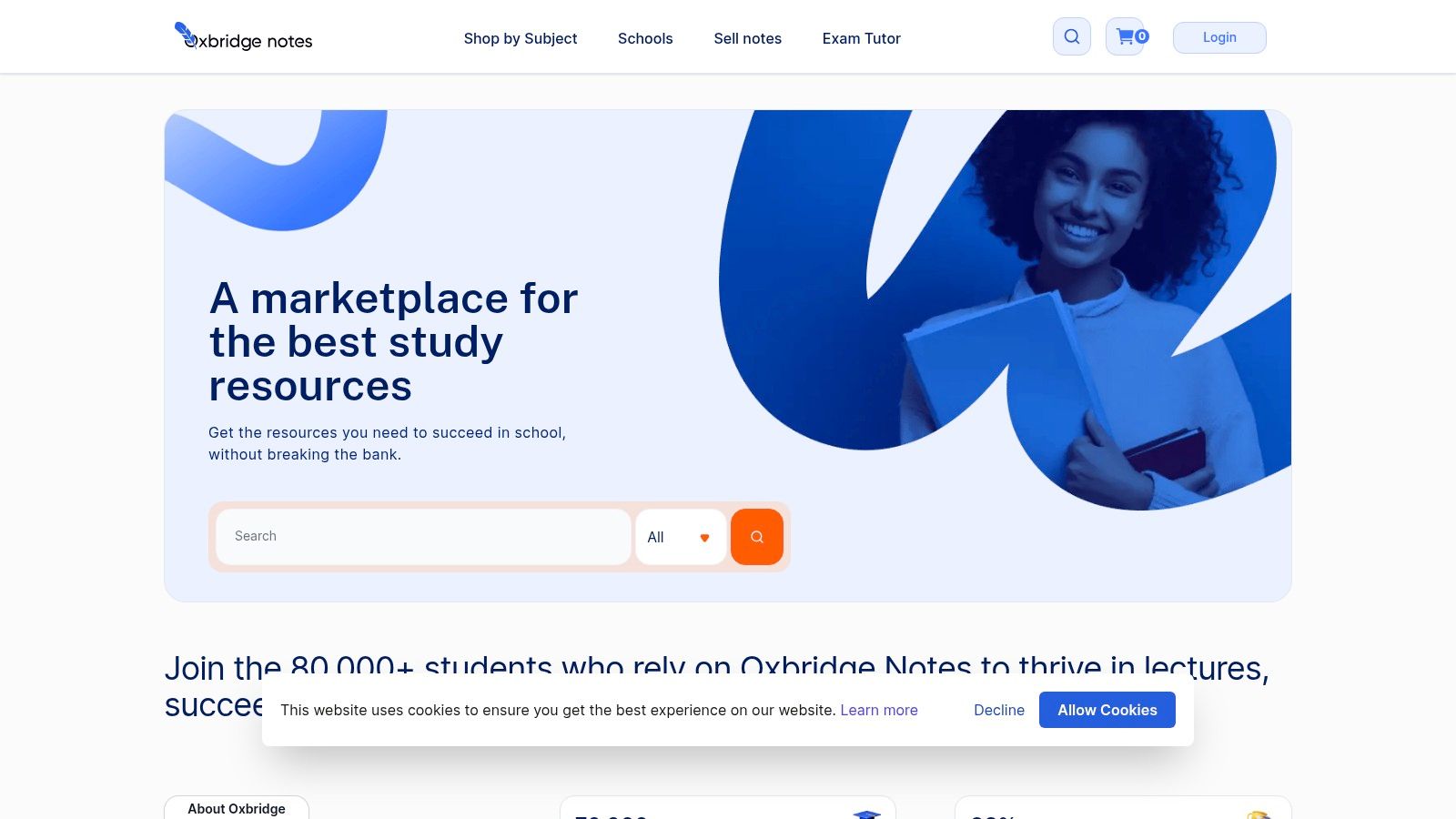
The tradeoff is coverage. It skews more toward UK and EU syllabi, and its law content is often the strongest fit. If you're in a U.S. program, you may still find useful materials, but the fit isn't guaranteed across every course. That's a reminder that the best-looking notes aren't always the best-matched notes.
Why the editorial model matters
A curated marketplace can save time because it reduces the amount of sorting you need to do. The risk is that premium editing can also mean premium pricing, so you're paying for curation as much as content. If your class changes instructors often, or if your course uses a highly localized syllabus, a more flexible marketplace might be easier to use.
Oxbridge Notes is a good option when you want the notes to feel closer to a revision pack than a rough student upload. Just keep the course fit in view, especially if your module structure or textbook differs from the pack description. Visit Oxbridge Notes (opens in a new tab) if you want a more polished marketplace.
7. GradeBuddy
GradeBuddy is built around lecture-by-lecture notes created by assigned notetakers, which makes it useful when you miss class or want a consistent stream of course-tracked material. That structure matters because the value of college notes online often comes from sequence, not just content. A clean run of weekly notes can be more useful than a single generic summary.
The platform also offers course packets and a wider repository of academic documents, so it isn't limited to one note format. That said, availability depends heavily on campus and course coverage, so you may find strong support for one class and nothing for another. Pricing visibility can also be uneven, so you'll want to inspect the listing carefully before committing.
Best fit: students who want notes that follow the class calendar closely, especially if attendance has been inconsistent.
GradeBuddy works best when the notetaker was in your section and followed the same instructor, textbook, and pacing. If those details don't line up, the notes can look useful but still miss the point of the course. That makes it more of a precision tool than a broad search engine.
If you're choosing between several note sources, GradeBuddy is strongest when you know the exact class and need steady coverage rather than a giant catalog. Visit GradeBuddy (opens in a new tab) if course-by-course continuity matters more to you than broad browsing.
8. StudySoup
StudySoup takes a class-based approach through designated Elite Notetakers, which makes the platform feel more structured than a generic document dump. Students can buy semester-long coverage for some classes or pick individual study guides, so it can work well if you want a pack that follows the full term. For college notes online, that semester coverage is one of its main selling points.
The platform is also interesting because it supports students who want to earn from their notes. That creates an incentive for organized, reusable material, but it also means the experience depends on whether someone in your course covered the class. If nobody did, the platform won't help much.
The key limitation is the same one that affects many course-based marketplaces. You can't assume the pack fits your class just because the title looks close. Confirm the course code, instructor if available, and the academic year before you pay.
A simple verification habit
Before buying, compare three things at once, the course name, the syllabus topics, and the document preview. If any of those look off, stop. A useful pack should match the rhythm of your course, not just its title.
StudySoup is worth checking when you want a course-by-course notes package and a seller model built around term coverage. It's less useful when your institution or section is unusually specific. Visit StudySoup (opens in a new tab) if your main need is structured class coverage.
9. Studypool Notebank
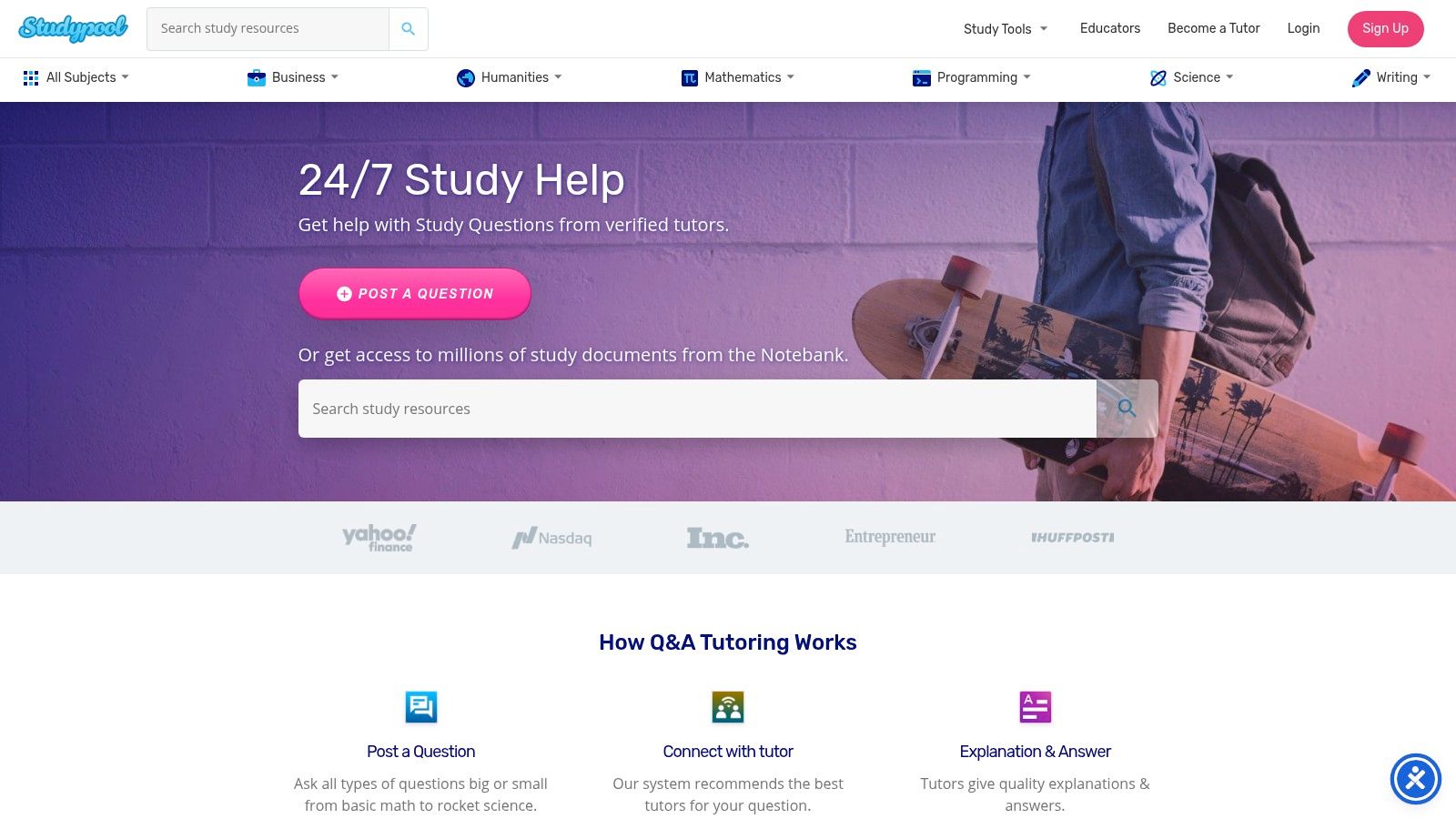
Studypool's Notebank sits alongside its Q&A marketplace, so it's a hybrid source rather than a dedicated notes store. Students can subscribe to access uploaded class notes, guides, and practice questions, or sell their own notes through a simple seller flow. That makes it a flexible place to browse college notes online, especially if you're already using the broader Studypool ecosystem.
The platform's appeal is the volume of document types. It isn't limited to lecture notes alone, which can be helpful if you want practice questions or guides to complement your class notes. The caution is that quality varies widely, and the platform's subscription model means you should read the plan details closely before you assume unlimited access.
What to watch for
- Preview depth: Don't rely on the title alone, read enough pages to judge quality.
- Plan terms: Check access rules before subscribing, especially for downloads.
- Use case fit: It's better as a supplement than a single source of truth.
- Seller credibility: Treat well-organized uploads as more trustworthy than bare listings.
Studypool can work if you want a broad pool of documents and don't mind doing more filtering yourself. If you're sensitive to subscription terms or want tighter course matching, a more curated alternative may be easier to evaluate. Visit Studypool Notebank (opens in a new tab) if you want notes and practice material in the same environment.
10. Studinotes
Studinotes is a straightforward notes marketplace built around packs, which makes it easy to understand at a glance. Sellers bundle their best notes into storefront listings, and buyers can browse college notes online without dealing with a larger study suite full of unrelated tools. That simplicity is the main reason it belongs on this list.
The platform is best for students who want a clean notes-first experience and for authors who want a niche storefront. It also supports visible previews, which helps buyers judge whether a pack is usable before paying. The tradeoff is catalog depth, which is smaller than the biggest platforms and can vary by region.
That smaller catalog isn't necessarily bad if your needs are narrow. In a course where the exact pack exists, a simple notes marketplace can be faster to scan than a giant platform full of mixed content. The downside is obvious, if your course isn't covered, there's no workaround besides checking another source.
Who should start here
Students who know exactly what they want and don't want an all-in-one study tool. Students who prefer pack-style listings. Students who value a direct notes marketplace over a broader content ecosystem.
Studinotes works best as a focused option rather than a one-stop solution. If you want a large marketplace with more built-in study tools, another platform may fit better. Visit Studinotes (opens in a new tab) if you want a compact, notes-first storefront.
Top 10 Online College Notes Platforms Comparison
Turn Shared Notes Into Safer Study Support
Start with the exact course code and module, then confirm the institution, textbook, academic year, assessment scope, and document coverage before you pay or download anything. If a file only matches the subject name, that's not enough. A real fit means the notes line up with the way your class is taught, assessed, and scheduled.
Preview enough pages to judge clarity and completeness, then cross-check the notes against your official syllabus, lecture slides, reading list, and assignment instructions. Use the material to find gaps, build flashcards, and test recall. Don't copy text into submitted work, and don't treat a shared file as a replacement for attending class or doing the reading.
A short ethical checklist helps keep things clean. Confirm that the uploader has the right to share the material, respect copyright ownership, follow your school's academic-integrity policy, and be cautious with answer keys or solution sets that could cross into misconduct. If a document's origin is unclear, or if the preview suggests it may be incomplete or misattributed, leave it alone.
The best resource is usually the one with the clearest relevance and access terms, not the biggest catalog or the cheapest listing. That's especially true with college notes online, where course fit matters more than volume. Choose the platform that makes verification easiest, then use the notes to support your own study process, not to replace it.
CramShare is built for exactly this problem, finding college notes online by course code, module, university, textbook, and academic year instead of guessing from broad subject labels. If you want a course-focused place to browse, preview, and share study materials, visit CramShare and see whether the exact notes you need are already there.