How to Take Lecture Notes in College: A Practical Guide
How to Take Lecture Notes in College. Master college lecture notes with proven systems like Cornell, outline, and mapping. Learn live-tactics, digital tools
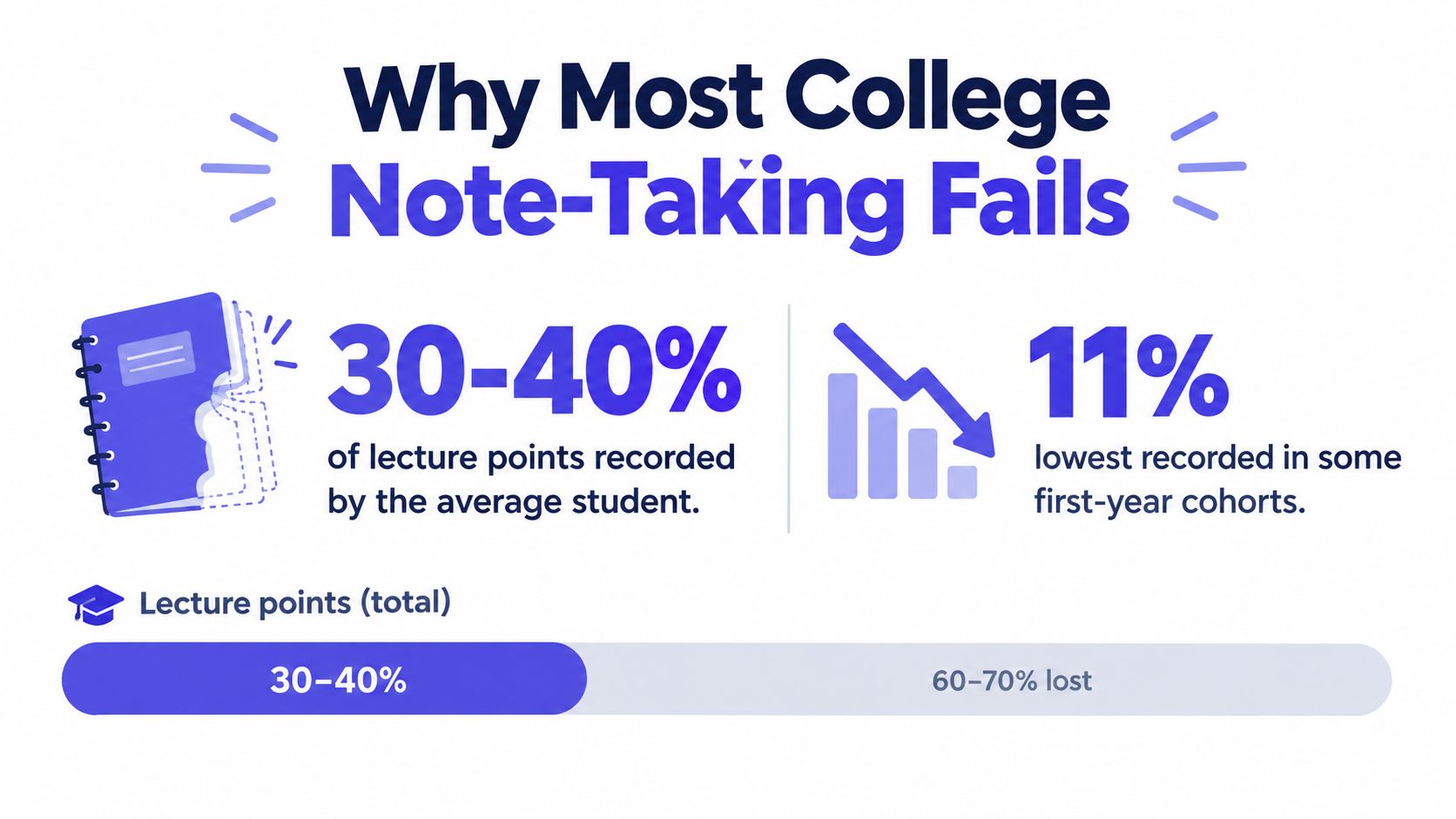
Students commonly record only 30 to 40% of lecture points, and some first-year cohorts have fallen as low as 11% (Cornell Notes guidance (opens in a new tab)). The challenge in how to take lecture notes in college isn't speed, it's turning class time into something you can study from later.
Good notes are a working draft of understanding, not a transcript. If you only copy words, you end up with pages that look complete but still fall apart on a midterm.
Why Most College Note-Taking Fails
The biggest mistake is treating note-taking like storage. A lecture goes by, the page fills up, and it feels productive. What matters most often gets missed unless you decide what to keep, what to question, and what to review later.
Practical rule: if a point would still matter after class, it deserves space. If it only sounds important because it was spoken loudly, it probably doesn't.
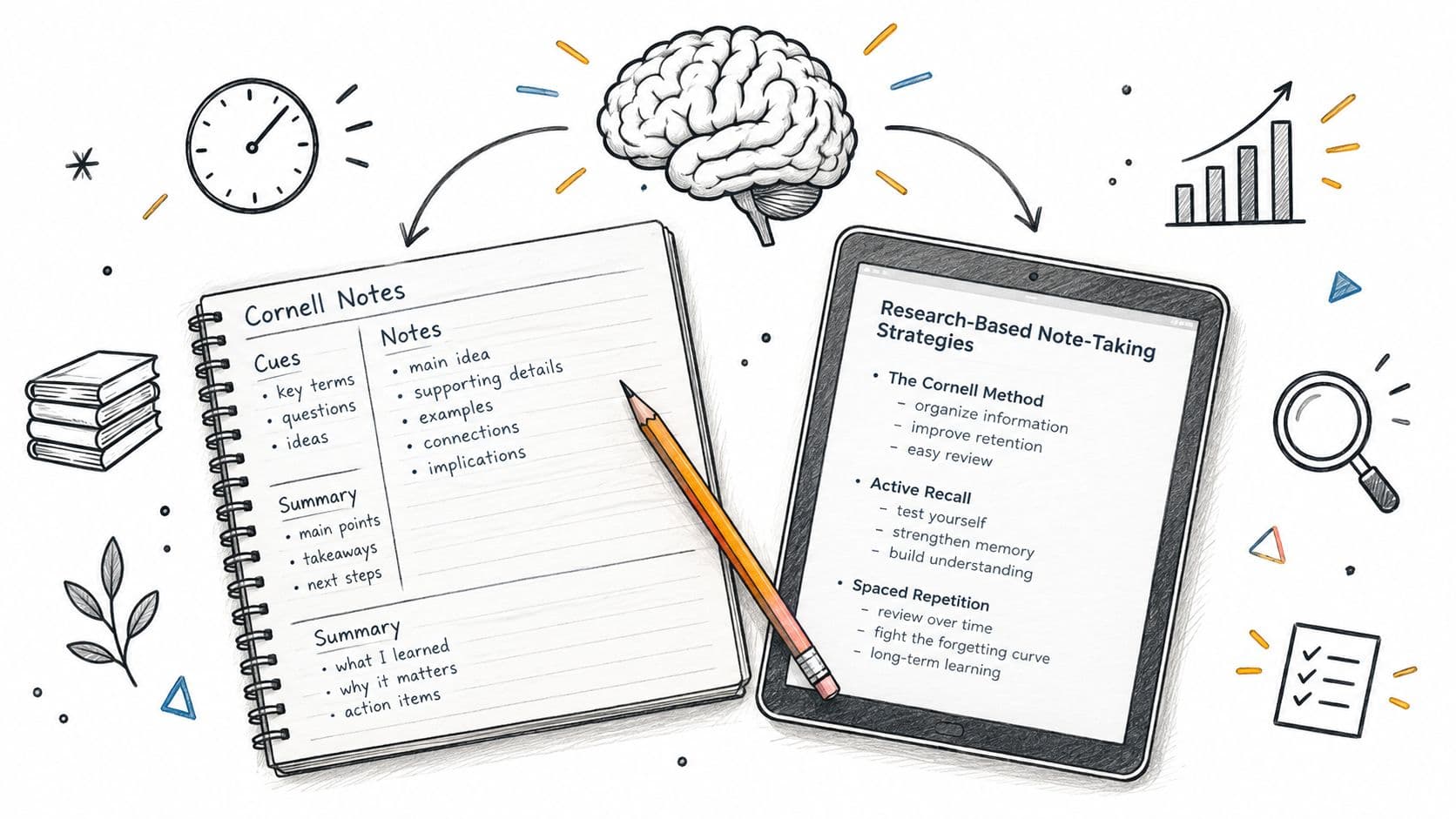
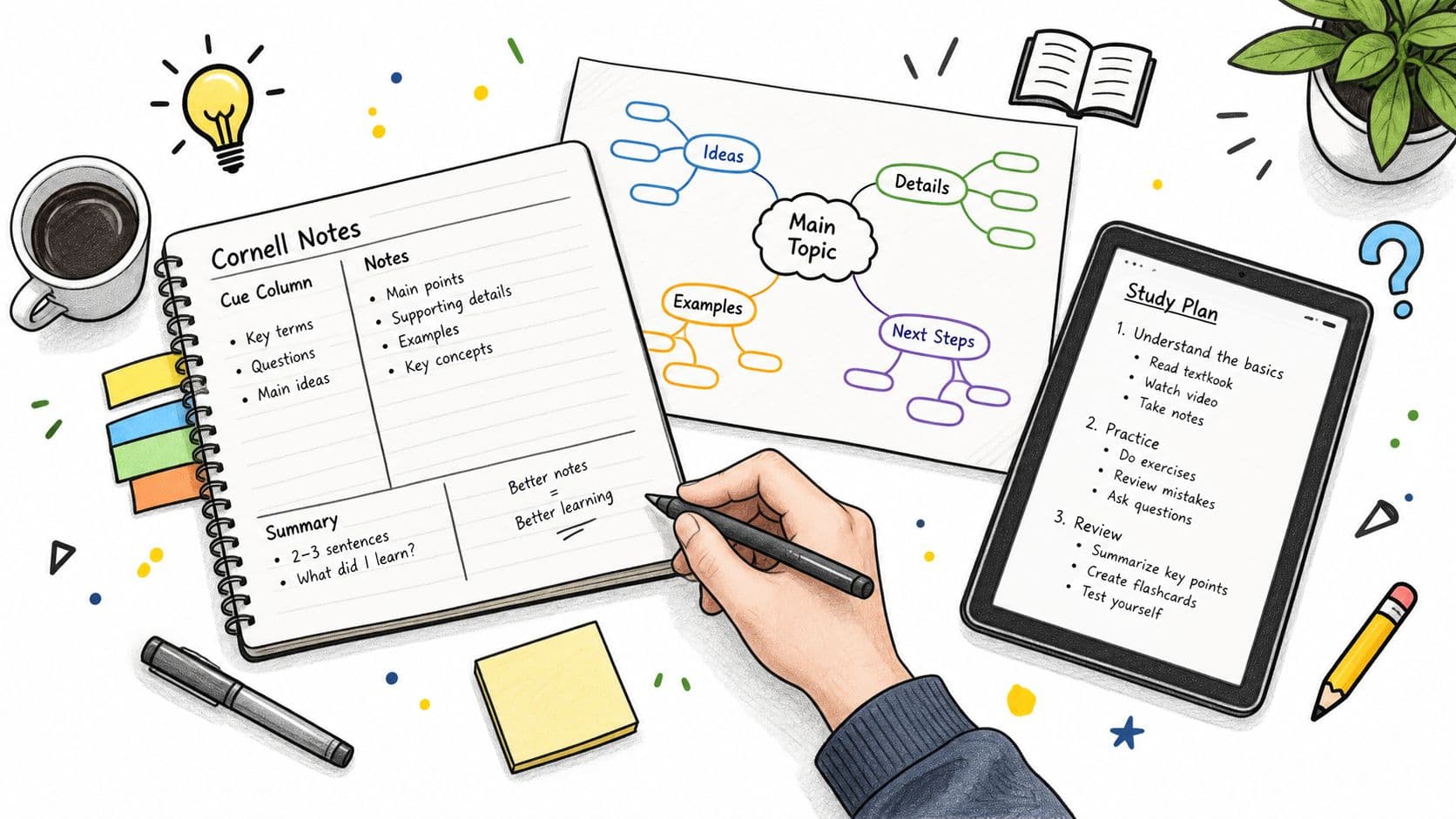
The Cornell layout puts facts on the right, your own questions on the left, and a summary below. That structure supports retrieval, which is why verbatim transcription turns into dead weight so easily. You can have a full notebook and still not know what the lecture meant.
The selectivity problem shows up in the research too. Cornell Notes guidance reports that students often capture only about 30 to 40% of lecture points, with some first-year groups as low as 11% and some groups reaching 72% (Cornell Notes guidance (opens in a new tab)). The goal is not to copy every sentence. The better target is the material instructors signal as examinable, the causal links, worked examples, warnings, and transitions.
That same pressure is why the first two hours after class matter so much. Notes become useful when you process them, not when you stop writing. A close look at course-specific note-taking research helps show why some formats hold up better than others once the lecture ends.
Choosing the Right Note-Taking System
Cornell Works Best When Review Matters Most
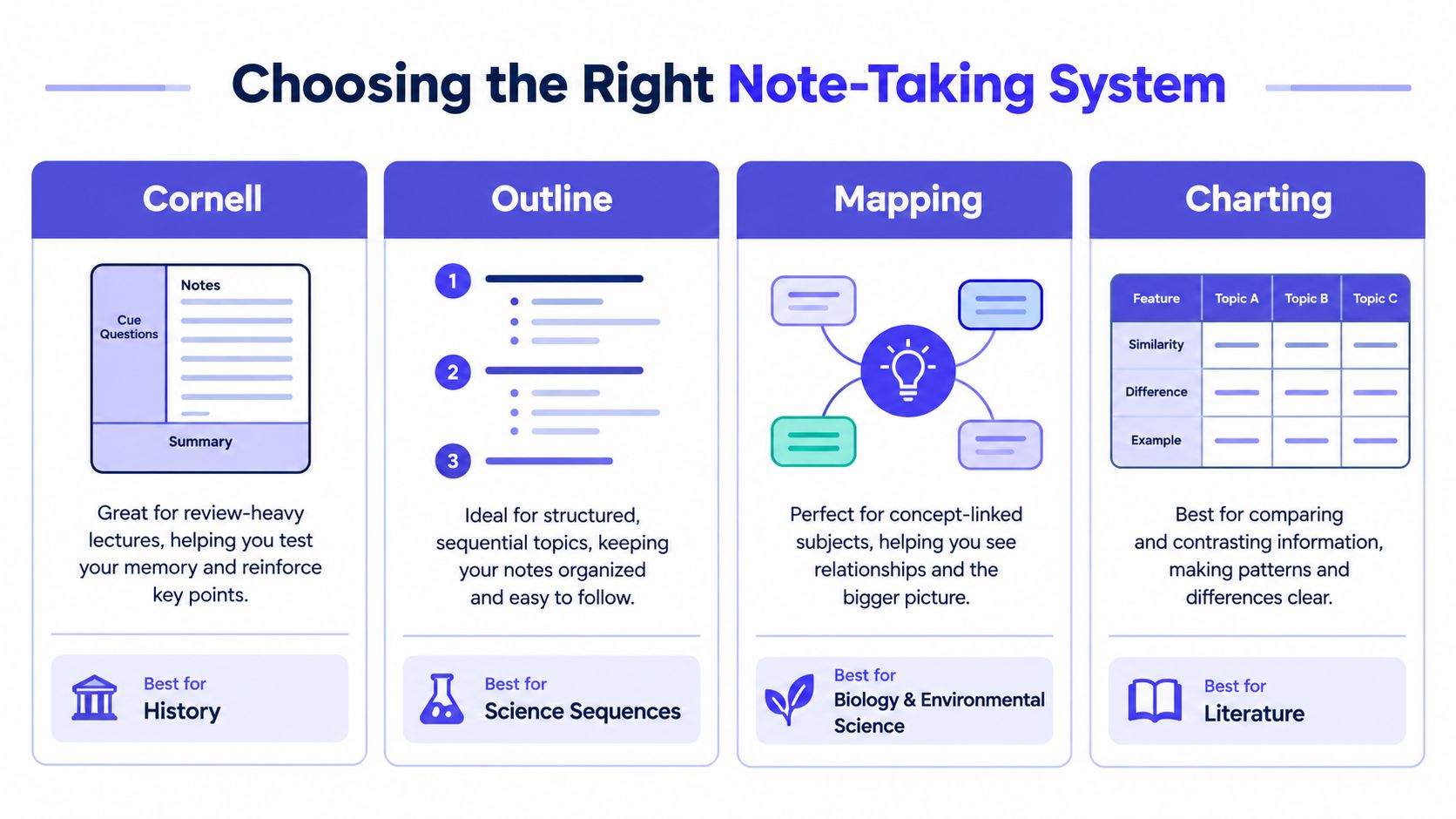
Cornell is the safest default for lectures you'll need to revisit, especially if the class leans toward definitions, mechanisms, or exam questions that reward recall. The split page forces you to separate raw capture from later questioning, which is exactly why it survives test week better than a wall of paragraphs.
Outline Fits Clear, Sequential Lectures
If the professor teaches in tidy layers, outline notes are usually the cleanest fit. Headings, subheadings, and nested bullets mirror the lecture structure, so you can see how one concept leads to the next without hunting through scattered comments.
Mapping Helps When Ideas Branch
Mind mapping is stronger in seminars, theory-heavy discussions, and classes where the relationships matter as much as the terms. It's not about pretty bubbles. It's about showing how one idea connects to another, which helps when a lecture keeps circling back to the same theme from different angles.
Charting Saves Time in Comparison-Heavy Courses
Charting is the right choice for classes built around categories, contrasts, or recurring fields like author, date, method, outcome, or term. Once the columns are set, review gets faster because you can scan patterns instead of rereading prose.
The method should fit the lecture, not your ego. A clean chart beats a fancy system you'll abandon by week three.
For a practical layout example, see the note organization guide at note-taking layout advice. If you prefer a quick visual on lecture formats, the embedded reference video can be useful when you're deciding which structure to use before the semester starts.
Watch the video on YouTube (opens in a new tab)
Live Lecture Tactics and Digital Discipline

The medium matters far less than the setup around it. A recent meta-analysis of 77 effect sizes from 39 samples found no meaningful average performance gap between handwritten and digital notes, which means the tool by itself does not decide the outcome. What matters is whether your setup protects attention during class and makes review easier afterward (meta-analysis and classroom study (opens in a new tab)).
Before the Lecture Starts
Open only what you need. On a laptop or tablet, keep the note app full-screen, close unrelated tabs, and silence notifications before class begins. If you use paper, set up a template with space for headings, examples, and questions so you are not deciding layout while the instructor is already moving on.
During the Lecture, Filter Hard
Do not chase every sentence. Pause at each conceptual unit and write a one-sentence paraphrase, then add a linking word such as because, therefore, or contrasts with so the relationship stays visible later. If you are handwriting, abbreviate aggressively and use symbols for repeated ideas, then photograph or scan the page right after class so the notes do not disappear into your bag.
A controlled classroom study reported that the odds of distraction were 70% lower for handwritten note-taking than for laptop note-taking. The same analysis reported higher quiz scores for tablet users than laptop users, while handwritten and laptop scores did not differ significantly in that sample.
Accessibility Changes the Decision
Students with attention, processing, or physical disabilities may need speech-to-text, captions, transcripts, or AI-assisted organization. Used well, those tools support access without replacing the student's own thinking. Record only when allowed, annotate important or uncertain sections yourself, check AI summaries against slides or readings, and turn the result into questions you can answer from memory.
The two-hour window after class matters here. That is when rough notes should become usable study material, especially if you rely on accessibility tools or switch between devices during lectures. As noted earlier, CramShare can be used as a reference point for course and module-based lecture notes and summaries, but it should never replace your own review.
Organizing Notes by Course and Module
A note file that can't be found later is nearly useless. The fix is to organize it the same way your university organizes the course itself, which usually means course code, academic year, and module name at the top of every document.
Tag What You Know, What's Unclear, and What You'll Apply
Right after class, mark each note with one of three tags, know, unclear, or apply. That tiny habit forces a decision. If you understand it, leave it. If you don't, turn it into a question. If it's useful in a problem set or essay, label it so you can find it quickly during revision.
Clean the Structure While the Lecture Is Fresh
Move rough notes into a document that mirrors the syllabus. Keep the week or module heading, then place examples underneath the core idea instead of leaving them scattered across the page. That makes exam prep much easier because you're revising by topic, not by memory of where you happened to write something.
A good organization system also reduces the fake comfort of a polished shared doc. A tidy file still needs your own correction, your own questions, and your own self-testing before it becomes study material.
If you can't locate a note in under ten seconds, it isn't organized yet.
Use the same naming pattern every time. Course code first, then module, then lecture date. That way, when revision starts, the search bar does more of the work and your stress level does less.
From Note-Taking to Active Recall
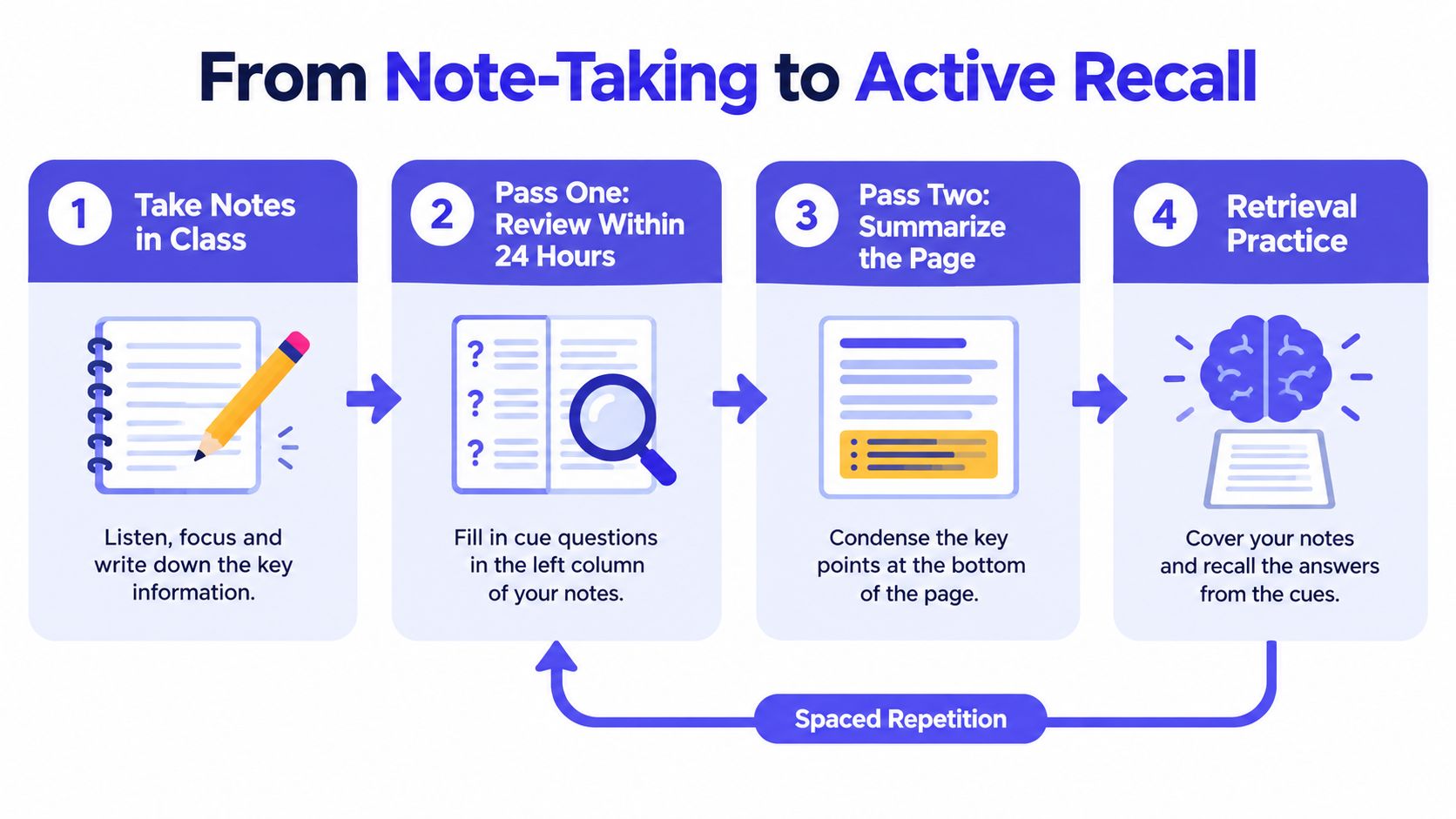
The two-hour window after class is where lecture notes start to become usable knowledge. Leave them untouched, and you are mostly recognizing familiar lines later. Work with them, and you begin building recall, which is what exams actually ask for.
Turn Headings into Questions Within 24 Hours
The Cornell system works because it forces a second pass. Convert each heading into a question, cover the page, and answer from memory before checking what you wrote. That small delay matters because it changes the task from scanning to producing.
The Cornell guide warns that students can forget 60 to 75% of noted material within two days without active engagement afterward (Cornell Notes guidance (opens in a new tab)). Same-day review helps slow that loss.
Summarize the Page, Then Test It
At the bottom of the page, write a short summary in your own words. Keep it tight. Capture the mechanism, the example, or the argument in language that still makes sense a week later, then close the page and answer three questions: what the central idea was, what supported it, and how it could appear on an exam.
Spaced re-testing beats repeated skimming because it forces production, not recognition. If you want a way to set up that review rhythm across courses, spaced repetition tools can help you turn notes into a real study cycle.
Discipline-Specific Note-Taking Strategies
An organic chemistry page and a philosophy seminar page should not look alike. Different subjects ask for different kinds of memory, so your notes should match the task instead of pretending one format fits everything.
STEM Courses Need Structure, Precision, and Repetition
In chemistry, biology, physics, and math, notes should protect the chain of reasoning. Write formulas, steps, units, and diagram labels clearly, then leave room for worked examples and corrections. If the professor walks through a problem, the key is not to copy every scratch mark, it's to capture the logic that explains why the next step follows.
Labs need a second layer. Procedure and observation belong together, because a clean set of instructions means little if you can't connect it to what the result was supposed to show.
Humanities Courses Need Argument Tracking
Literature, history, and philosophy reward a different kind of note. Don't only write what was said, write the claim, the evidence, and the tension between interpretations. A seminar on a novel is easier to revise if you can see which themes recur and which passages were used to defend them.
A Simple Course Pairing Example
A first-year student in biology might use a digital outline for lecture facts, then add a short handwritten diagram page for pathways and structures. In a history class, that same student might switch to charting, with columns for date, event, cause, effect, and significance. The point is not to be consistent for its own sake, it's to make the page match the way the class will ask questions later.
When you stop forcing one system onto every course, note-taking gets calmer. You spend less time rewriting the same page and more time building a review stack that holds up when the exam arrives.
Good lecture notes aren't just written in class, they're processed after class, tagged properly, and turned into questions you can answer cold. If you want course-matched lecture notes, summaries, and revision materials that help you compare your own pages against a real example, visit CramShare and look for resources tied to your exact course and module.